

If you’ve ever scrolled through news headlines about the stock market soaring or crashing, or heard someone casually mention they “made a trade” over lunch, you’ve probably wondered what trading actually means. Trading has become one of the most talked-about ways to participate in the financial world.
With the rise of online trading platforms and easy access to global markets, millions of people are now exploring trading as a way to grow their wealth, diversify their income, or simply understand how financial markets work.
Whether you have heard about stock trading, forex, cryptocurrency, or commodities, they all share one common idea—buying and selling assets to make a profit.
That’s it.
Everything else — the charts, the jargon, the strategies — builds on top of that one simple idea.
However, trading is much more than simply buying low and selling high. It requires knowledge, patience, discipline, and continuous learning. Successful traders understand market trends, manage risks carefully, and avoid making decisions based purely on emotions.
This guide is meant to walk you through the basics in plain language, so by the end you’ll have a solid foundation to explore financial markets with more confidence and a lot less confusion.
Table of Contents
The Basic Idea Behind Trading
Trading happens when one person or entity buys something from another person or entity, hoping the value of what they bought will change in their favor.
If you buy a share of a company for $50 and later sell it for $60, you’ve made a $10 profit.
But If the price drops to $40 and you sell, you’ve taken a loss.
That simple exchange — buy low, sell high, or sometimes sell high and buy back low — is the engine that drives all trading activity.
What makes trading different from investing is largely a matter of timeframe and intention.
Investing usually refers to holding an asset for years, betting on long-term growth, like retirement savings tucked into index funds.
Trading, on the other hand, tends to involve shorter timeframes — days, hours, or even minutes — and traders are actively trying to capitalize on price movements rather than just waiting for gradual growth.
Neither approach is inherently better; they simply serve different goals and suit different personalities.
Understanding Financial Markets
Financial markets are places where financial assets are bought and sold. These markets connect individuals, businesses, governments, and institutions, making it possible to exchange capital efficiently.
Financial markets play several important roles:
- They help businesses raise money.
- They allow investors to grow wealth.
- They support economic development.
- They determine fair market prices.
- They improve liquidity by allowing assets to be bought and sold easily.
Without financial markets, economic growth would slow because businesses would struggle to raise funds and investors would have fewer opportunities.
Different Types of Financial Markets
Financial markets aren’t just one giant pool of stocks. They’re actually made up of several distinct markets, each with its own rules, participants, and rhythms.
1. Stock Market
The stock market is a marketplace where investors buy and sell ownership shares of publicly listed companies.
When you purchase a share, you own a small piece of that business, including a claim on future profits.
Prices rise and fall based on company performance, economic conditions, investor sentiment, and broader news events. Exchanges like the NYSE or Nasdaq act as organized venues connecting buyers with sellers.
People participate for different reasons: some seek long-term growth through investing, while others trade actively for shorter-term gains.
Ultimately, the stock market channels capital toward businesses while giving everyday individuals a chance to build wealth over time.
Popular examples include companies from sectors such as technology, healthcare, finance, energy, and manufacturing.
Stock prices change due to:
- Company earnings
- Business growth
- Economic conditions
- Investor confidence
- Industry performance
Stocks remain one of the most popular assets for beginners because information is widely available and markets are relatively transparent.
2. Forex Market
The forex market is where currencies get bought and sold against each other, non-stop, five days a week.
Banks, businesses, governments, and individual traders all participate, exchanging money to enable trade, travel, and investment worldwide.
It’s the largest financial market by volume, driven by shifting exchange rates influenced by interest rates, economic data, and global events shaping currency values.
Examples include:
- EUR/USD
- GBP/USD
- USD/JPY
- AUD/USD
Forex is the largest financial market in the world, operating 24 hours a day during weekdays.
Currency prices are influenced by:
- Interest rates
- Inflation
- Central bank decisions
- Political stability
- International trade
3. Cryptocurrency Market
The cryptocurrency market is where digital currencies like Bitcoin, Ethereum, and thousands of altcoins are bought, sold, and traded, typically through online exchanges.
Unlike stock markets, it never closes, running 24/7 across global time zones.
Prices are driven by supply and demand, investor sentiment, regulatory news, and technological developments rather than traditional company earnings.
Known for sharp volatility, this market attracts both long-term holders and active traders chasing short-term price swings, making it one of the most talked-about corners of modern finance.
Crypto markets are known for:
- High volatility
- Large price swings
- Rapid innovation
- Higher risk
- Greater potential rewards
Because prices can move dramatically within a short time, beginners should approach cryptocurrency trading carefully.
4. Commodity Market
A commodity market is where raw materials like gold, oil, wheat, or coffee get bought and sold. Traders use it to speculate on price swings, while businesses hedge against rising costs, ensuring stable pricing for the physical goods they produce or consume daily.
Examples include:
- Gold
- Silver
- Crude oil
- Natural gas
- Wheat
- Coffee
- Sugar
Commodity prices often change because of:
- Weather conditions
- Supply shortages
- Global demand
- Political conflicts
- Economic growth
Many investors use commodities to diversify their portfolios.
5. Bond Market
The bond market is where governments and companies borrow money by selling debt instruments called bonds.
Investors buy these bonds, essentially lending their cash in exchange for regular interest payments plus repayment of the original amount later.
It’s less flashy than stock trading but plays a huge role in global finance, funding everything from infrastructure projects to corporate expansion, while offering investors a generally steadier, lower-risk alternative to equities.
Who Actually Trades?
It’s easy to picture trading as something only Wall Street professionals do, but the reality is far broader.
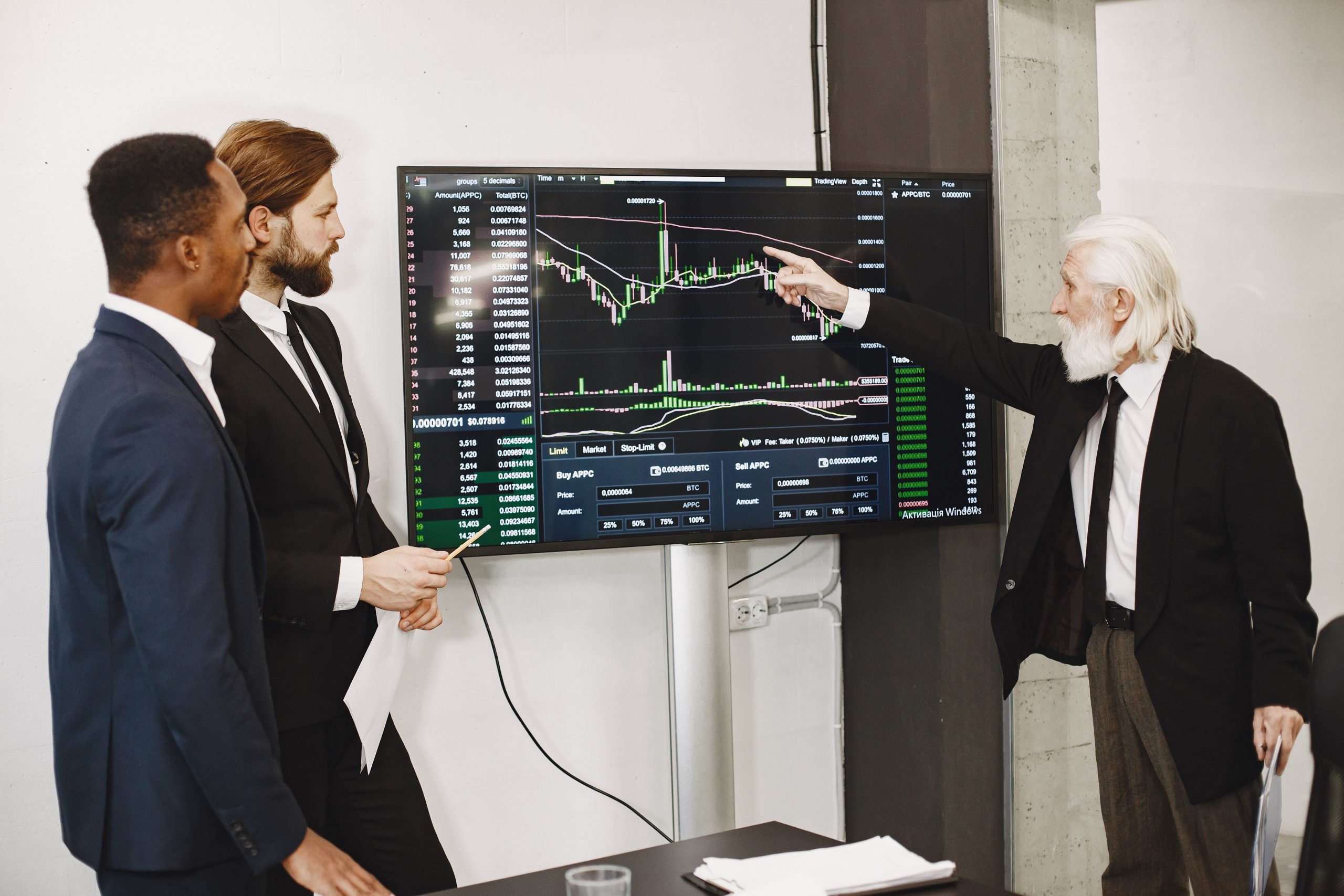
Retail traders — everyday individuals trading through apps and online brokerages — now make up a significant portion of daily market activity.
Alongside them are institutional traders, like hedge funds, pension funds, and investment banks, who often move much larger sums of money and can influence prices simply through the size of their transactions.
There are also market makers, who provide liquidity by constantly buying and selling to ensure there’s always someone on the other side of a trade.
Without them, markets would be much harder to navigate, since finding a matching buyer or seller instantly wouldn’t always be possible.
How Trading Works?
Every trade involves two parties:
- A buyer
- A seller
When both agree on a price, the trade is executed.
Trading works through a simple exchange: you buy an asset hoping its price rises, then sell it later for a profit — or do the reverse if you expect prices to fall.
Say you buy 10 shares of a company at $20 each, spending $200. If the price climbs to $25, selling those shares nets you $250 — a $50 profit. If the price drops to $15 instead, selling gives you only $150, a $50 loss.
This same logic applies across markets. In forex, you might buy euros when the dollar is weak, then sell them back once the euro strengthens. In commodities, a trader could buy gold before demand rises, then sell once prices climb.
Traders also “short” assets — borrowing and selling first, then buying back cheaper later, profiting from price drops rather than gains.
At its heart, trading is about correctly predicting price direction and timing your moves well.
How Do You Actually Make Money Trading?
There are two basic directions a trade can take. Going “long” means you buy an asset expecting its price to rise, then sell later at a higher price.
And Going “short” is a bit trickier — it involves borrowing an asset, selling it immediately, and then buying it back later at a hopefully lower price, pocketing the difference.
Short selling lets traders profit even when markets are falling, though it comes with its own risks, since losses on a short position can theoretically be unlimited if the price keeps rising instead of falling.
Profit in trading essentially boils down to correctly predicting price direction and timing your entry and exit well. Of course, that’s easier said than done, which is why traders rely on tools and strategies to improve their odds rather than just guessing.
Common Approaches to Trading
There isn’t one single “correct” way to trade. Different traders adopt different styles depending on their risk tolerance, available time, and personal preferences.
- Day trading involves opening and closing positions within the same trading day, never holding overnight. Day traders try to capture small price movements repeatedly throughout the day, requiring intense focus and quick decision-making.
- Swing trading takes a slightly longer view, with positions held for several days or weeks to capture a “swing” in price momentum. This style suits people who can’t watch charts all day but still want to actively manage trades.
- Position trading stretches even further, sometimes lasting months, and blends elements of both trading and investing, focusing on larger trends rather than short-term noise.
- Scalping trading is the fastest style of all, with trades lasting mere seconds or minutes, aiming to profit from tiny price changes repeated many times over.
Beginners often gravitate toward swing or position trading at first, since the slower pace allows more time to think through decisions without the pressure of constant, rapid-fire choices.
Fundamental vs Technical Analysis
To decide when and what to trade, most traders lean on one (or both) of two main analytical approaches.
- Fundamental analysis looks at the underlying health and value of an asset. For a stock, that might mean examining a company’s earnings, revenue growth, debt levels, industry position, and broader economic conditions. The idea is that if you understand the true value of something, you can spot when it’s underpriced or overpriced relative to where it should be.
- Technical analysis, on the other hand, focuses purely on price charts and patterns, largely setting aside the underlying business or economic story. Technical traders study price history, trading volume, and recurring patterns, believing that historical price behavior can offer clues about future movements. Tools like moving averages, support and resistance levels, and various chart patterns fall under this umbrella.
Many traders blend both approaches, using fundamentals to decide what to trade and technicals to decide when to actually enter or exit a position.
Trading vs Investing: What’s the Real Difference?
Trading and investing both involve putting money into financial markets, but the mindset, timeline, and approach behind each are worlds apart. Traders chase short-term price swings, while investors focus on long-term value creation. Here’s a simple breakdown:
| Aspect | Trading | Investing |
|---|---|---|
| Time Horizon | Short-term (minutes to weeks) | Long-term (years to decades) |
| Goal | Profit from price fluctuations | Build wealth through steady growth |
| Example | Buying Tesla stock in the morning and selling it by afternoon for a quick $200 gain | Buying shares of Tesla and holding them for 10 years as the company expands |
| Approach | Relies heavily on technical analysis, charts, and market timing | Relies on fundamental analysis, like company earnings and industry outlook |
| Risk Level | Generally higher, due to frequent buying/selling and market volatility | Generally lower, since long holding periods smooth out short-term ups and downs |
| Involvement | Requires constant monitoring and quick decisions | Requires periodic review, less day-to-day attention |
| Example Asset | Day trading crude oil futures based on daily price movement | Investing in an index fund tracking the S&P 500 for retirement |
| Emotional Demand | High, since decisions must be made fast under pressure | Lower, since patience matters more than speed |
| Income Style | Active income from frequent transactions | Passive income through dividends, interest, or long-term appreciation |

A trader might buy shares of a company before an earnings report, expecting a quick jump in price, then sell within hours regardless of the company’s long-term prospects.
An investor, on the other hand, might buy shares of that same company because they believe in its leadership and growth story, planning to hold the stock through market ups and downs for years.
Neither approach is right or wrong — they simply serve different financial goals.
Trading suits those comfortable with risk and quick decisions, while investing suits those building wealth patiently over time.
Many people even blend both strategies, trading a portion of their portfolio actively while investing the rest for the long haul.
Understanding Risk (Because It’s Everywhere)
Risk management is one of the most important aspects of trading. No honest guide to trading would be complete without a serious conversation about risk. Trading is not a guaranteed path to wealth, and it’s important to understand that losses are a normal, unavoidable part of the process, even for experienced traders.
Risks of Trading
Trading also involves significant challenges:
- Financial losses
- Market volatility
- Emotional stress
- Unexpected news events
- Technical failures
- Leverage-related losses
- Economic uncertainty
Understanding these risks helps traders make more informed decisions.
Markets are influenced by countless factors: economic data, political events, company news, interest rate changes, natural disasters, and sometimes just plain unpredictable human sentiment.
Prices can move sharply and unexpectedly, and even the most carefully researched trade can go wrong.
This is why risk management is such a central part of trading education.
Traders often use tools like stop-loss orders, which automatically close a position if it moves against them by a certain amount, limiting potential losses. Position sizing — deciding how much money to put into any single trade — is another key discipline, since risking too much on one trade can wipe out an account quickly if things go poorly.
A commonly repeated principle among experienced traders is to never risk more than you can afford to lose.
It sounds obvious, but it’s remarkably easy to ignore in the heat of the moment when emotions like greed or fear start driving decisions instead of logic.
The Role of Emotions and Discipline
Speaking of emotions, they play a much bigger role in trading than most beginners expect. It’s tempting to imagine trading as a purely logical, numbers-driven activity, but in practice, fear and greed often hijack decision-making.
Traders might hold onto losing positions too long, hoping prices will bounce back, or exit winning trades too early out of fear of losing gains they’ve already made.
Developing discipline — sticking to a plan, setting clear rules for entries and exits, and not letting emotions override strategy — is often what separates consistently successful traders from those who struggle. It’s a skill that takes time and practice to build, much like any other discipline in life.
Tools of the Trade
Modern trading has been transformed by technology.
Online brokerages and trading apps have made it possible for virtually anyone with an internet connection to open an account and start trading within minutes.
These platforms typically offer real-time price charts, news feeds, order execution tools, and sometimes even educational resources or paper trading (simulated trading with fake money) so beginners can practice without financial risk.
Many traders also use trading journals to track their trades over time, noting what worked, what didn’t, and why. This kind of reflection helps identify patterns in one’s own behavior, not just in the market.
Important Tips for Beginners
If you’re new to trading, consider these practical recommendations:
- Learn the basics before risking real money.
- Start with a demo account to practice.
- Focus on one market instead of many.
- Develop a simple trading strategy.
- Keep a trading journal.
- Use stop-loss orders consistently.
- Manage risk on every trade.
- Continue learning through books, courses, and market observation.
- Stay patient and avoid trying to get rich quickly.
- Review your performance regularly and learn from both wins and losses.
Consistency is often more valuable than chasing rapid profits.
Benefits of Trading
Trading offers several potential advantages:
- Opportunity to grow capital
- Access to global markets
- Flexible working hours
- Ability to trade from almost anywhere
- Continuous learning opportunities
- Portfolio diversification
- Potential income generation
However, these benefits come with risks, and profits are never guaranteed.
Is Trading Right for Everyone?
Trading is not a guaranteed path to wealth, and it isn’t suitable for everyone.
It requires time, discipline, emotional control, and a willingness to learn from mistakes.
While some people enjoy analyzing markets and making informed decisions, others may prefer long-term investing or different financial strategies.
If you decide to explore trading, start slowly. Build your knowledge first, practice with virtual funds, and gradually gain experience before committing significant capital.
Viewing trading as a skill to develop rather than a shortcut to easy money will help set realistic expectations.
Our Final Thoughts
Trading is the practice of buying and selling financial assets to benefit from changes in market prices. Financial markets—including stocks, forex, commodities, cryptocurrencies, and bonds—offer opportunities for individuals to participate in the global economy. While trading can potentially generate profits, it also carries meaningful risks that should never be overlooked.
It isn’t a get-rich-quick scheme, despite how it’s sometimes portrayed online.
It’s a skill, and like any skill, it takes time, patience, and continuous learning to develop.
With the right foundational knowledge, a willingness to learn from mistakes, and a healthy respect for risk, anyone can begin to understand how financial markets function and start exploring whether trading is something they want to pursue further.
Whether you eventually decide trading is for you or you simply walk away with a better understanding of how stocks, currencies, and commodities move around the world, that knowledge itself has value.
Financial markets touch nearly every part of modern life, from the interest rates on your savings account to the price of gas at the pump, so understanding even the basics of how trading works helps make sense of the bigger economic picture we all live in.
Let’s start Trading!