

Worried about inflation eating into your retirement savings? Learn how to safeguard your retirement nest egg from rising costs with smart investment moves, budgeting tips, and inflation-beating strategies. Inflation is one of the quietest threats to a comfortable retirement. It doesn’t crash your portfolio overnight the way a market downturn can — instead, it slowly chips away at your purchasing power, year after year, until the same dollar amount buys noticeably less than it used to.
For retirees living on a fixed income, this “silent tax” can be especially dangerous because there’s often no paycheck coming in to offset rising costs.
Retirement is supposed to be about relaxation, but inflation can feel like a silent partner slowly draining your purchasing power. If the cost of living rises by just 3% to 4% a year, the value of a fixed savings pot can cut in half over a two-decade retirement.
The good news is that with the right mix of strategies, you can build a retirement plan that keeps pace with — or even outpaces — inflation. Below is a practical, easy-to-follow breakdown of how to shield your nest egg from the eroding effects of rising prices.
Table of Contents
Why Inflation Matters in Retirement?
Inflation is one of the most overlooked threats to a comfortable retirement. Unlike your working years, when a raise or new job can help you keep pace with rising prices, retirement often means living on a fixed income — savings, pensions, or Social Security payments that don’t automatically grow at the same rate as the cost of living.
Even a modest inflation rate of 3% annually can significantly erode your purchasing power over time. What costs $50,000 a year today could cost nearly $90,000 in 20 years. If your retirement income doesn’t grow to match, you’ll gradually be able to afford less — from groceries and healthcare to travel and hobbies.
Healthcare costs are particularly concerning, since they tend to rise faster than general inflation and become a larger expense as we age. Housing, utilities, and everyday essentials also add up over a retirement that could last 25–30 years or more.
This is why retirement planning can’t stop at simply saving enough — it must also account for how that money will hold its value over decades.
Understanding inflation’s long-term impact helps retirees choose the right mix of investments, income sources, and withdrawal strategies to maintain their standard of living throughout retirement.
Why Inflation Is So Dangerous in Retirement?
When you’re working, rising prices are annoying but manageable — your salary often adjusts over time.
In retirement, though, many people rely on fixed sources of income like pensions or savings withdrawals that don’t automatically increase.
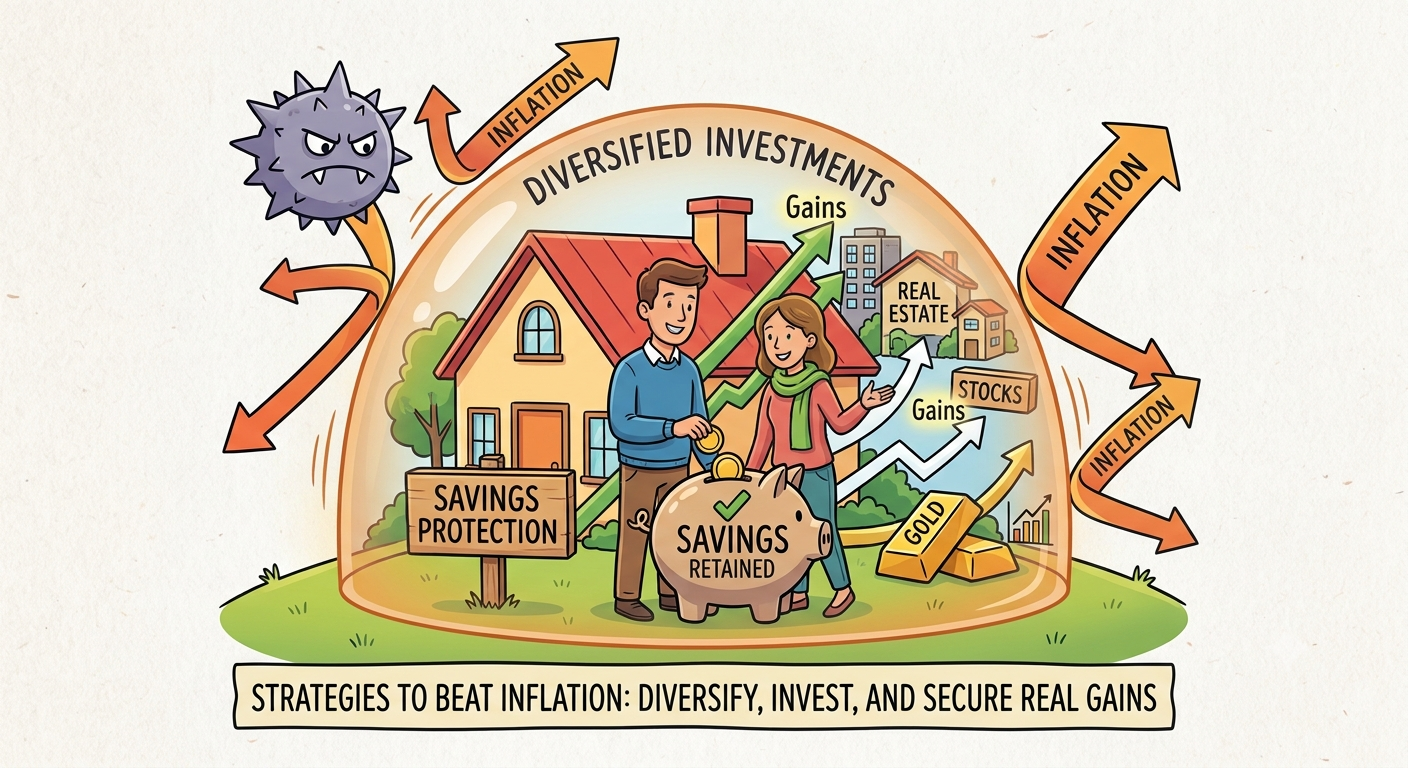
Even a modest average inflation rate of 3% per year can cut your purchasing power roughly in half over a 20–25 year retirement.
That means the lifestyle you planned for at age 65 could look very different at age 85 if your money isn’t structured to grow alongside costs.
Smart Strategies to Protect Retirement Savings from Inflation
Protecting your retirement savings from inflation requires shifting focus from simply “saving money” to preserving purchasing power. Because inflation erodes the real value of fixed income over time, relies on proactive strategies to ensure your nest egg lasts throughout your golden years.
Here are 12 core strategies can help safeguard a retirement portfolio against rising costs:
1. Keep a Meaningful Allocation to Stocks
It’s tempting to shift entirely into “safe” assets once you retire, but stocks have historically outpaced inflation over long periods far more consistently than cash or bonds.
A completely conservative portfolio can actually increase your risk of running out of money in real terms.
Many financial professionals suggest retirees maintain a diversified equity allocation — often through low-cost index funds — even after leaving the workforce, adjusted to match individual risk tolerance and time horizon.
2. Consider Treasury Inflation-Protected Securities (TIPS)
TIPS are government bonds specifically designed to adjust their principal value based on changes in the Consumer Price Index (CPI).
As inflation rises, so does the bond’s value and the interest paid on it.
This makes TIPS one of the most direct, low-risk tools available for hedging against inflation, though their returns can be modest during periods of low inflation.
3. Look Into Series I Savings Bonds
I Bonds are another government-backed option that combines a fixed rate with an inflation-adjusted rate that resets twice a year.
They’re particularly useful for a portion of your emergency fund or short-term cash reserves, since they offer inflation protection with very low risk — though annual purchase limits and early-withdrawal rules mean they work best as a supplement, not a full strategy.
4. Keep Some Exposure to Real Estate
Real estate often acts as a hedge against inflation because property values and rental income tend to rise over time.
This could include direct property ownership or investing through Real Estate Investment Trusts (REITs).
5. Add Real Estate or REITs to Your Portfolio
Real estate has historically served as a strong inflation hedge because property values and rents tend to rise along with the general price level.
If owning physical property isn’t practical in retirement, Real Estate Investment Trusts (REITs) offer exposure to real estate markets through publicly traded shares, often with attractive dividend yields.
6. Prioritize Dividend-Growth Stocks
Companies with a long history of increasing their dividends — often called “dividend aristocrats” — can provide a rising income stream that helps offset inflation over time.
Unlike bonds with fixed coupon payments, dividend-growth stocks can adjust upward as company earnings grow, which historically has often outpaced inflation.
7. Delay Social Security if Possible
Delaying Social Security is one of the simplest ways to boost your retirement income and fight inflation. For every year you wait past your full retirement age, up to age 70, your benefit grows by roughly 8% — a guaranteed increase few investments can match.
This higher monthly payment also comes with built-in cost-of-living adjustments, helping your income keep pace with rising prices for life.
If you can cover expenses through other savings or part-time work in the meantime, delaying Social Security offers a powerful, low-risk way to strengthen your long-term financial security in retirement.
8. Diversify Across Asset Classes
No single investment protects perfectly against inflation in every environment.
A blend of stocks, real assets (like real estate or commodities), inflation-linked bonds, and some cash reserves creates multiple layers of defense.
Diversification reduces the risk that any one inflationary period catches your entire portfolio off guard.
9. Reassess Your Withdrawal Rate Regularly
The classic “4% rule” is a helpful starting point, but it isn’t one-size-fits-all, especially during high-inflation periods. Reviewing your withdrawal rate annually — and adjusting spending in years when inflation spikes — can help your savings last longer without forcing you to sell investments at a loss during downturns.
A Quick Tip on the 4% Rule:
The traditional retirement rule states you can safely withdraw 4% of your nest egg in year one, adjusting that dollar amount for inflation every year after. In periods of volatile inflation, build flexibility into this rule. Dynamically lowering your discretionary spending during high-inflation spikes can add years of longevity to your savings portfolio.
10. Consider Annuities With Inflation Riders
Some annuity products offer optional riders that increase payouts over time to help offset inflation. These come at an additional cost and reduce the initial payout, so they’re worth comparing carefully against other guaranteed-income options before committing.
11. Keep an Emergency Cash Buffer — But Not Too Much
Cash loses value to inflation faster than almost any other asset class, but having 6–12 months of expenses in a high-yield savings account or money market fund still matters. It prevents you from being forced to sell investments during a market dip just to cover near-term expenses.
12. Reduce Unnecessary Expenses
Lowering your monthly expenses gives your savings more room to grow and last longer. Review subscriptions, debt payments, and lifestyle costs regularly.
A simple lifestyle adjustment today can protect your financial future tomorrow.
Common Mistakes Retirees Make
- Keeping too much cash in low-interest accounts
- Ignoring inflation in retirement planning
- Withdrawing too much too early
- Failing to rebalance investments
- Underestimating healthcare costs
Avoiding these mistakes can improve long-term financial stability.
Quick-Reference Summary
| Factor | Impact |
|---|---|
| Fixed Income | Doesn’t automatically rise with prices, unlike work-era wages |
| Purchasing Power | 3% inflation can nearly double costs in 20 years |
| Healthcare Costs | Often outpace general inflation, hitting retirees hardest |
| Retirement Length | 25–30+ years means prolonged inflation exposure |
| Everyday Expenses | Housing, utilities, and groceries steadily become costlier |
| Planning Impact | Requires smart investments, income diversification, and withdrawal strategy |
Bottom line: Saving enough isn’t sufficient — retirees must plan for inflation to protect their long-term financial security and lifestyle.
How Much Inflation Should You Plan For?
Financial experts often recommend planning for 2% to 4% annual inflation. However, actual rates can vary depending on economic conditions.
Building flexibility into your retirement plan can help you adapt to changing circumstances.
Final Thoughts
Protecting your retirement savings from inflation isn’t about finding one perfect investment — it’s about building a resilient, diversified plan that can adapt as prices rise.
The goal is not just to save money but to make sure your savings continue working for you throughout retirement.
Combining growth-oriented assets, inflation-linked securities, and a flexible withdrawal strategy gives retirees the best chance of maintaining their purchasing power for decades to come.
Important Points to Understand This Topic
- What is inflation and how does it affect retirement?
- Why purchasing power decreases over time
- Best investments to beat inflation
- The role of stocks, bonds, and TIPS
- Real estate as an inflation hedge
- Managing healthcare expenses in retirement
- Building a sustainable withdrawal strategy
- Common inflation mistakes retirees should avoid
- How to create an inflation-proof retirement plan
This article is for general informational purposes only and does not constitute financial or investment advice. Everyone’s retirement situation is different, so consider speaking with a licensed financial advisor before making decisions about your savings and investments.