

If you’ve been Googling “how to start a fashion blog” at midnight while scrolling through outfit inspiration on your phone, you’re not alone. Thousands of people fall in love with fashion every year and wonder if they could turn that passion into something bigger.
Starting a fashion blog sounds exciting until you sit down in front of a blank screen and realize you have no idea which software to choose, what to name your site, or how people actually turn outfit posts into real income.
The truth is, building a successful fashion blog today looks very different than it did a decade ago. It is no longer about posting blurred mirror selfies with a list of outfit tags.
Successful creators run focused digital platforms that solve real style problems for a specific audience.
Whether you want to share thrifted outfit ideas, review luxury handbags, or help busy professionals build functional capsule wardrobes, learning how to start a fashion blog gives you complete ownership over your content and income.
This guide walks you through the entire process, from choosing your niche to publishing your first post to eventually making money blogging. Whether you want a creative outlet, a portfolio for future opportunities, or a real income stream, you’ll find a clear path forward here.
Table of Contents
Why Start a Fashion Blog in the First Place
Before you touch a single technical setting, it’s worth asking: what can a fashion blog actually do for you?
The truth is, one of the best fashion blogs out there is rarely just a daily-outfit diary.
It’s a personal brand, a searchable body of work, and — for many creators — a genuine business.
Think of your blog as digital real estate you actually own.
Unlike Instagram or TikTok, where algorithms decide who sees your content and platform rules can change overnight, a blog gives you full creative and commercial control.
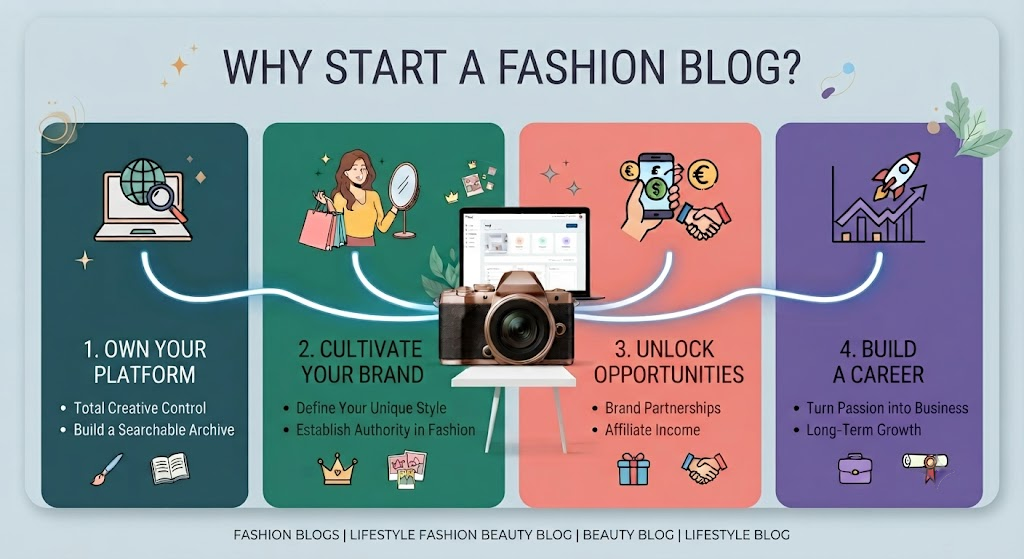
Why Start a Fashion Blog? | Benefits & Career Guide
The Power of Owning Your Platform
While social media channels are fantastic for quick engagement, they come with algorithm changes and rented land. A dedicated fashion blog gives you total control over your design, monetization, and content longevity.
-
Complete Creative Control: Unlike social platforms that limit your formatting, your website is entirely yours to customize.
-
Search Engine Longevity: Social media posts disappear within hours, but SEO-optimized blog posts can attract readers for years.
-
Diverse Monetization Opportunities: Turn your passion into profit through brand sponsorships, affiliate marketing, and digital products.
What a Fashion Blog Can Open Up
A well-run lifestyle fashion beauty blog isn’t limited to style tips. It can become a launchpad for:
- Brand partnerships – sponsored posts, gifted collections, and long-term ambassador deals
- Freelance writing – bylines with fashion magazines or other blogs once you’ve built credibility
- Styling and consulting clients – readers who want personalized fashion advice
- Affiliate income – earning commissions by linking products you genuinely recommend
- Full-time content creation careers – some bloggers eventually run their site as their main job
For example, a blogger who starts by reviewing thrifted outfits might grow into a go-to voice for sustainable fashion, eventually landing partnerships with eco-conscious clothing brands.
Fashion, Beauty, and Lifestyle Often Overlap
Many successful blogs don’t stay in one lane. A beauty blog focused on skincare routines might naturally expand into outfit styling, while a general lifestyle blog often ends up covering fashion, beauty, home, and wellness together. This crossover works because readers who care about how they look and live tend to be interested in all of it — not just one narrow topic.
If you’re unsure which direction to take, consider:
- Starting narrow (e.g., budget fashion) and expanding once you find your audience
- Blending fashion and beauty content from day one for a fuller lifestyle brand
- Letting reader engagement — comments, shares, questions — guide what you write next
Turn Your Passion Into Income
A successful fashion blog can eventually generate several income streams. You don’t need millions of visitors to start earning. A smaller audience that trusts your recommendations can be valuable to brands and advertisers.
Potential opportunities include:
- Affiliate marketing: Earn commissions when readers purchase products through your links.
- Sponsored content: Collaborate with fashion, beauty, or lifestyle brands.
- Display advertising: Generate revenue from advertisements placed on your website.
- Freelance writing: Use your published articles as writing samples.
- Styling services: Turn your fashion knowledge into personalized consultations.
- Digital products: Sell style guides, beauty checklists, or downloadable resources.
For instance, a beauty blog could publish a detailed review of skincare products and include affiliate links. A lifestyle-focused website might create a capsule wardrobe guide and recommend clothing items readers can purchase.
Set Realistic Expectations
Here’s the part most “how to start a blog” guides skip: growth is slow, especially in the beginning. Search rankings take time to build, and audience trust doesn’t happen overnight.
The bloggers who eventually succeed share one trait — they treat their blog like a long-term project, not a quick side hustle. That means:
- Publishing consistently, even when traffic is low
- Improving old posts instead of only chasing new ones
- Studying what performs well in similar fashion blogs and adapting the lesson, not the content
Key Takeaways for Long-Term Success
Blogging is a marathon, not a sprint. Success requires consistency, authenticity, and patience. Treat your platform like a long-term business asset rather than a quick hobby, and your audience will naturally follow.
How to Start a Fashion Blog (10-Step Guide)
Starting a fashion blog isn’t just about sharing outfits — it’s about building an asset you control. Whether you lean purely into fashion or blend it into a broader lifestyle fashion beauty blog, the foundation is the same: consistency, patience, and content that genuinely helps your reader get dressed, feel confident, or discover something new.
Here is the simple 10-step guide to start your fashion blog today.
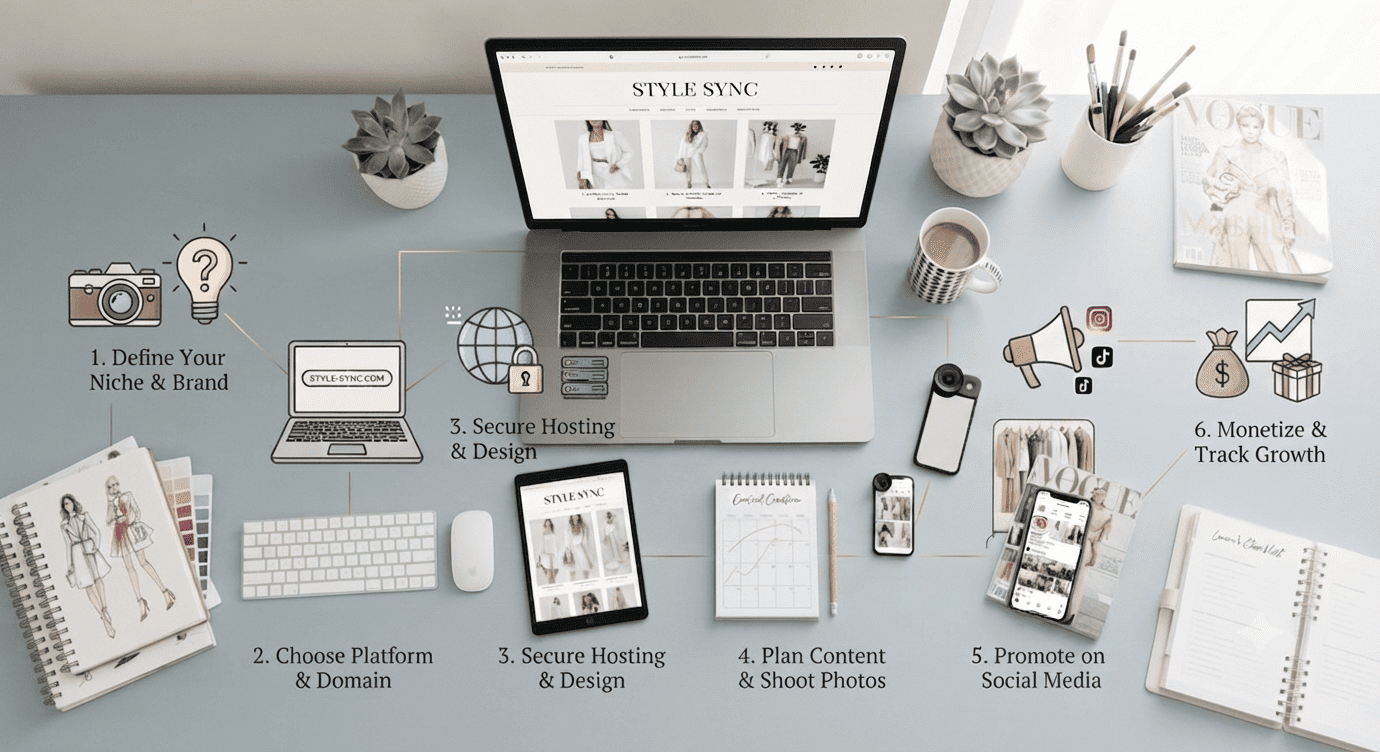
Learn how to start a successful fashion blog with our comprehensive step-by-step guide, covering niche selection, WordPress setup, content planning, and monetization.
Step 1: Find Your Unique Fashion Niche
The biggest mistake new creators make when learning how to start a blog in the style space is trying to appeal to everyone. If your website covers high fashion runway trends, budget thrift hauls, men’s formalwear, and toddler outfits all at once, visitors won’t know why they should stay.
A focused niche helps you build authority fast. It gives search engines a clear signal about your core topics and helps readers instantly recognize that your content was made specifically for them.
Instead, pick a niche that reflects your genuine interests and where you can offer a unique perspective.
Some popular fashion blog niches include:
- Budget and affordable fashion
- Sustainable and ethical fashion
- Plus-size style
- Minimalist or capsule wardrobes
- Petite fashion
- Workwear and office style
- Streetwear
- Vintage and thrifted fashion
- Fashion for specific body types or life stages, like postpartum style or fashion over 50
Your niche doesn’t have to lock you in forever, but having one at the start gives your blog a clear identity. It also makes it easier to build authority with search engines and readers alike, which matters a lot if organic traffic is part of your long-term plan.
Step 2: Pick a Blog Name and Domain
Your blog name is the first thing readers see, so it deserves more thought than a quick brainstorm. The best names among successful fashion blogs are memorable, easy to spell, and hint at a niche without boxing you in completely.
What Makes a Strong Blog Name
Before falling in love with a name, run it through a few practical filters:
- Keep it short, so it’s easy to type on mobile
- Avoid numbers or hyphens, which are easy to mistype or forget
- Skip hard-to-spell words, even if they feel clever
- Check social handles, so your brand stays consistent across platforms
- Google it first, to confirm it isn’t already tied to another site or brand
For example, a name like “StyledByMara” is short, easy to say out loud, and instantly signals a personal fashion voice — far more effective than something long or overly abstract.
Finding the Right Domain Name Ideas
Once your name is set, you’ll need to lock in a domain — your blog’s actual web address, like yourblogname.com. This is where solid domain name ideas really pay off, since your domain often doubles as your brand name.
A few approaches that tend to work well:
- Match your domain exactly to your blog name whenever possible
- If your first choice is taken, try adding “blog” or “style” rather than random numbers
- Consider whether the name still fits if you expand later into a broader lifestyle fashion beauty blog covering skincare or beauty content
- Keep alternatives ready in case your top pick isn’t available
Registering Your Domain
Domain registration usually comes with a small annual fee, and most hosting providers let you register one directly during sign-up, saving you an extra step.
Whether you’re launching a niche beauty blog or a broader style-focused site, a clear, well-chosen name and domain give your blog a professional foundation before you’ve even published your first post.
Step 3: Choose a Blogging Platform
If you’re wondering how to blog in a way that’s sustainable long-term, the platform you choose matters more than most beginners realize. Some platforms are great for hobby blogging, while others are built for bloggers who eventually want to monetize seriously.
Here’s a quick breakdown of common options:
WordPress.org (self-hosted): This is the most popular choice among professional bloggers because it gives you full ownership and control over your content, design, and monetization. It requires hosting, which we’ll cover next, but it’s worth the small learning curve.
Squarespace or Wix: These are user-friendly, all-in-one platforms that combine hosting and design tools. They’re a solid choice if you want something visually polished with minimal setup, though customization and monetization can be more limited.
Free platforms like Blogger or WordPress.com: These are fine for testing the waters, but they come with real limitations, including less control over branding, restricted monetization options, and sometimes ads you don’t control.
If you’re serious about learning how to start a blog that can grow into a business, self-hosted WordPress is generally the strongest long-term option.
Pro Tip: Avoid free drag-and-drop website builders if your long-term goal is to make money with a fashion blog. Free platforms often restrict display ads, limit affiliate link tools, and charge heavy premiums for basic search engine optimization features.
Step 4: Set Up Hosting and Design
Every great fashion blog needs a solid foundation before the outfits and opinions come in. That foundation is hosting — the service that stores your site’s files and keeps it live on the internet.
It sounds technical, but the choice you make here directly affects your site speed, uptime, and even how well you rank on Google.
Personally, we’ll recommend Ionos web hosting to start your blogging journey.
Why Hosting Quality Matters
Skimping on hosting is one of the most common mistakes new bloggers make. A slow or unreliable host can quietly sabotage everything else you build. Before picking a provider, prioritize:
- Speed – slow-loading pages drive readers away and hurt search rankings
- Uptime – your blog should be accessible 24/7, not down during peak traffic
- Support – responsive customer service when something breaks
- Scalability – room to grow as your lifestyle fashion beauty blog gains readers
Choosing a reputable host over the cheapest option available will save you headaches later.
Choosing a Theme That Works
Once hosting is sorted, your theme shapes how visitors experience your site. For fashion blogs, design isn’t just decoration — it’s part of the storytelling. Look for a theme that is:
- Mobile responsive, since most readers of fashion and beauty blog content browse on their phones
- Fast loading, so photo-heavy pages don’t lag
- Easy to customize without needing to code
- Visually clean, letting your photography and outfits take center stage
Keep the Design Simple
A common trap for new lifestyle blog owners is overdecorating the homepage — too many colors, fonts, or widgets competing for attention. Fashion readers respond best to minimal, image-forward layouts.
For example, a blogger showcasing a street-style look shouldn’t bury the photo under cluttered sidebars or flashing banners. Let the outfit be the focal point, with clean typography and plenty of white space guiding the eye.
Good hosting and thoughtful design won’t guarantee traffic on their own, but together they create the reliable, professional backbone your content needs to grow.
Avoid overloading your homepage with too many colors, fonts, or widgets. Fashion readers respond well to clean, image-forward layouts that let your content breathe.
Step5: Launching Your Site’s Technical Foundation
Setting up a website sounds intimidating, but modern tools have made the process almost plug-and-play. If you’re wondering exactly how to blog on a self-hosted platform, here’s the step-by-step technical path to getting your WordPress site live.
1. Select Web Hosting
Self-hosted WordPress requires a hosting provider — this is non-negotiable. Sign up with a reliable option such as Hostinger, SiteGround, or Bluehost, and start with a basic shared hosting plan. You can always upgrade as your fashion blogs attract more traffic.
2. Register Your Domain
Most hosting plans include your first year of domain registration free. This is the moment to lock in one of your domain name ideas — claim it during sign-up so your hosting and domain are linked from day one.
3. Install WordPress
Skip manual database setups entirely. Nearly every host offers a one-click WordPress installation directly from the dashboard. For example, logging into Hostinger’s control panel and clicking “Install WordPress” typically takes under five minutes, no coding required.
4. Configure Basic Settings
This step is essential for SEO readability, yet it’s the one beginners skip most often. Once installed, log into your wordpress control panel at yourdomain.com/wp-admin, then:
- Go to Settings > Permalinks
- Set your URL structure to Post name
- Save changes
This creates clean, readable links (like yourdomain.com/spring-outfit-ideas) instead of messy strings of numbers and symbols — both easier for readers to trust and easier for Google to index.
Choose a Mobile-First Theme
Once your platform is live, pick a lightweight, mobile-responsive theme. Readers browse most fashion and style content on smartphones, so fast mobile loading times and sharp, clear imagery aren’t optional extras — they’re the baseline expectation for any blog competing for attention today.
With hosting, domain, WordPress, and permalinks in place, your technical foundation is done — everything from here is about content and growth.
Step 6: Plan Your Content Strategy
A content strategy is simply a plan for what you’ll write about and how often. Without one, it’s easy to post inconsistently or run out of ideas within a few weeks.
Start by brainstorming content categories within your niche.
For a budget fashion blog, that might include outfit breakdowns, seasonal shopping guides, dupe roundups, and style tips for specific occasions. For a sustainable fashion blog, it might include brand reviews, thrifting guides, and capsule wardrobe challenges.
Crafting High-Quality Fashion Content
Learning how to blog successfully comes down to producing content that answers search intent while keeping readers visually engaged. A great fashion article balances clear text explanations with helpful visual references.
Standard Fashion Article Types
To build sustainable traffic, balance your creative outfit posts with evergreen informational guides:
-
“How-to” Style Guides: Practical advice like How to style an oversized blazer for work or How to break in leather boots without pain.
-
Product Reviews & Comparisons: Deep dives like Lululemon vs. Athleta Leggings Review or Is a trench coat worth the investment?
-
Curated Roundups: Highly searchable listicles like 12 Capsule Wardrobe Essentials for Autumn.
-
Size & Fit Breakdowns: Detailed sizing guides explaining fabric stretch, shrinkage, and measurements.
- Outfit posts and styling guides: Complete step-by-step outfit guides is the best way to express your knowledge.
Quality Writing Principles
-
Focus on specifics over fluff: Instead of writing “this jacket looks incredible,” explain why—mention the structured shoulder padding, heavy cotton lining, or functional deep pockets.
-
Add personal context: Detail your height, body shape, or usual sizing when reviewing clothes. This builds immense trust with readers searching for realistic fit advice.
-
Structure for scannability: Use short paragraphs, clear section headers, and bold text for key recommendations.
Step 7: Write and Publish Your First Posts
Starting can feel overwhelming, but pushing past perfectionism is the secret to success. When learning how to fashion blog, remember that audience connection and clarity always beat formal academic writing.
Once you log into your WordPress control panel, you are ready to bring your style vision to life.
Don’t let tech hurdles slow you down; focus purely on sharing your unique perspective with the world.
Pro Tips for Blog Post Writing in WordPress
Writing engaging fashion content is an art. Use these practical strategies to hook your readers immediately:
-
Cut the fluff: Start with a bold statement or outfit breakdown instead of a lengthy backstory.
-
Prioritize readability: Break up blocks of text with short paragraphs and descriptive subheadings.
-
Keep the tone conversational: Write just like you are texting a best friend about a new trend.
-
Be specific: Swap vague advice like “wear chic shoes” for actionable details like “pair distressed denim with metallic block heels.”
-
Add a strong CTA: Wrap up with a clear takeaway, such as asking readers to vote for their favorite look in the comments.
Example: Instead of writing, “Accessories can sometimes elevate an outfit,” try writing, “Adding a chunky gold chain necklace instantly transforms a basic white tee into a Paris-ready statement look.”
Why Consistency Beats Perfection
Your inaugural posts do not need to win design awards. The magic happens through consistency. Every time you draft and publish content directly inside your dashboard, you build momentum, sharpen your voice, and naturally climb search engine rankings. Hit publish today and refine your craft along the way!
Step 8: Build Your Signature Visual Style and Photography
Starting one of the top fashion blogs requires more than just compelling writing. Because aesthetics drive this industry, your imagery carries equal weight. Fortunately, you do not need expensive gear to master how to fashion blog successfully. A reliable smartphone, proper angles, and natural sunlight are all it takes to capture professional-grade fashion photography.
Developing a recognizable brand identity relies heavily on mastering basic photography for fashion blogs.
Essential Smartphone Photography Tips
-
Leverage Natural Light: Position yourself near a large window during peak daylight hours. This creates soft, flattering illumination without harsh shadows.
-
Stabilize Your Shots: Use an affordable mini tripod or a steady stack of books to keep your phone camera completely still.
-
Keep Edits Subtle: Apply light, cohesive editing adjustments rather than heavy filters that distort true clothing colors.
-
Maintain Consistency: Stick to a signature editing preset or color palette so readers instantly recognize your brand across social media and your website.
Example: If your aesthetic is minimalist and earthy, shoot against neutral concrete walls and use warm, muted presets. If you prefer bold streetwear aesthetics, opt for urban backdrops with high-contrast, vibrant tones.
Scaling Your Visuals Over Time
As your readership and monetization efforts grow, you can reinvest earnings into professional mirrorless cameras or collaborate with local creative talent. However, early traction depends entirely on resourcefulness, authentic storytelling, and consistent visual branding.
Step 9: Modern SEO Tips for Fashion Blogs
Want to know how to fashion blog rank higher on Google? You don’t need advanced marketing skills or complicated software. A smart fashion blog SEO strategy starts with understanding what your audience searches for and creating content that answers those searches clearly.
Target Long-Tail Keywords
Broad keywords such as “summer dresses” can be extremely competitive. Instead, focus on specific searches that reveal stronger user intent.
For example:
- “Best summer dresses for broad shoulders”
- “How to style wide-leg jeans”
- “Affordable work outfits for women”
- “Best sneakers to wear with maxi skirts”
Use your primary keyword naturally in your title, introduction, headings, URL, and relevant sections. Avoid repeating keywords simply to increase keyword density.
Make Fashion Images SEO-Friendly
Fashion blogs depend heavily on photography, but large image files can slow down your website. Resize and compress images before uploading them while maintaining good visual quality.
Add descriptive alt text that explains what the image shows.
Example:
alt="Woman wearing a dark denim jacket with wide-leg cream trousers"
This helps search engines understand your images and improves accessibility for readers using screen readers.
Answer Search Questions Quickly
One of the most effective SEO tips for fashion blog content is to answer the reader’s question early.
If your article targets “How do you style wide-leg jeans?” provide a short, direct answer immediately before expanding with outfit ideas, examples, and styling tips.
This structure makes your content easier to scan and can increase its chances of appearing in search features.
Build Internal Links
Connect related content across your site instead of leaving posts isolated. For example, if you mention styling sneakers inside a wardrobe guide, link directly to a detailed sneaker care article. This keeps readers on your site longer and signals to Google that your content is well-organized and authoritative.
Keep Creating Useful Content
Successful fashion blogs don’t rely on trends alone. Publish content around real search intent, update older articles when fashion trends change, improve weak pages, and create detailed guides that genuinely help readers.
Example: Instead of simply publishing “Fall Fashion Trends,” create a practical guide such as “How to Wear Fall Fashion Trends on a Budget.”
Elevating Your Search Performance
Consistent implementation of technical and on-page optimization compounds over time. By combining keyword-rich headings, fast-loading visual elements, and deliberate internal linking structures, your style platform will naturally climb search rankings and attract sustainable organic readership.
Step 10: Promote Your Fashion Blog and Grow Your Audience
Publishing beautiful content is just the beginning. If you want your fashion blog to attract consistent traffic, you need a promotion strategy that puts your content in front of the right readers.
Share Content Where Fashion Lovers Browse
Social platforms can help you turn individual posts into a steady stream of visitors. Focus on the channels your target audience actually uses.
- Instagram: Share outfit photos, Reels, styling tips, and behind-the-scenes content.
- Pinterest: Create attractive pins linking directly to your blog posts. Pinterest works heavily through visual discovery, making it particularly useful for fashion content.
- TikTok: Turn fashion advice, trends, and outfit ideas into short videos.
- Facebook: Share articles in relevant fashion and lifestyle communities where promotion is allowed.
For example, if you publish “10 Ways to Style a Denim Jacket,” create several Pinterest pins, an Instagram carousel, and a short TikTok showing three of the outfits.
Build Relationships in Your Niche
Don’t rely entirely on social media algorithms. Comment thoughtfully on relevant fashion websites, collaborate with creators, contribute guest articles, and connect with other bloggers.
These relationships can generate referral traffic, backlinks, and new readers over time.
Apply Fashion Blog SEO
A strong fashion blog SEO strategy can bring organic visitors long after you publish an article. Start by targeting specific searches instead of trying to rank for broad terms such as “fashion.”
Some useful SEO tips for fashion blog growth include:
- Target long-tail keywords and specific questions.
- Use descriptive headings and natural keyword variations.
- Add relevant internal links between related articles.
- Write descriptive image alt text.
- Optimize page titles and meta descriptions.
- Keep your content useful, original, and easy to scan.
If you’re wondering how to fashion blog rank higher in Google, focus on matching search intent. Instead of writing a generic post about dresses, create something specific like “What to Wear to a Summer Wedding: 15 Stylish Outfit Ideas.”
Start Building an Email Audience
Create an email list early and offer something useful, such as a seasonal style guide or outfit-planning checklist. Email gives you a direct way to bring readers back whenever you publish something new.
The goal isn’t simply to publish more—it’s to promote smarter, optimize consistently, and give readers a reason to return.
How to Make Money With a Fashion Blog
Starting a fashion blog can be a creative outlet, but it can also become a genuine source of income. Once your fashion blog begins attracting consistent visitors and you have earned your readers’ trust, several monetization opportunities become available.
The key is not to treat every article like a sales page. Successful fashion bloggers usually combine multiple income streams while keeping their recommendations useful, honest, and relevant to their audience.
1. Earn Through Affiliate Marketing
Affiliate marketing is one of the most accessible ways to monetize a fashion blog. You recommend products, link to retailers or brands, and earn a commission when a reader makes a qualifying purchase through your link.
For example, imagine you publish an article called “10 Affordable Workout Outfits for Women.” You could include links to the clothing, shoes, bags, and accessories featured in your recommendations.
To make affiliate marketing work:
- Recommend products you genuinely believe are useful.
- Explain why a product is worth considering.
- Compare different price points or alternatives.
- Place affiliate links naturally within helpful content.
- Clearly disclose affiliate relationships to your readers.
A simple product roundup can often perform better than an article packed with random promotional links because readers are already searching for buying advice.
2. Work With Fashion Brands
Sponsored content can become another valuable income source after your blog develops an established audience.
Fashion brands may pay bloggers to publish sponsored articles, create social media content, review products, or showcase new collections.
However, credibility matters. If you promote every product that approaches you, readers may quickly lose confidence in your recommendations.
Before accepting a sponsorship, consider:
- Does the brand fit your niche?
- Would your readers actually care about the product?
- Can you give an honest opinion?
- Does the partnership match your existing content?
Always disclose sponsored relationships clearly. Transparency protects your reputation and helps maintain trust.
3. Monetize With Display Advertising
Display advertising can generate passive revenue as your website attracts more visitors. Advertising platforms place relevant ads throughout your pages, and you typically earn based on impressions, clicks, or other engagement metrics depending on the network.
This strategy becomes more attractive when your fashion blogs generate substantial organic traffic.
That is why fashion blog SEO matters so much. The more valuable search traffic you attract, the greater your potential advertising revenue.
Instead of publishing dozens of shallow articles simply to increase pageviews, focus on useful topics such as:
- “How to Build a Capsule Wardrobe”
- “Best Office Outfits for Summer”
- “How to Style Wide-Leg Jeans”
- “Affordable Fashion Brands Worth Trying”
4. Create Digital Fashion Products
You don’t have to depend entirely on advertisers or brands. Your audience can become the foundation for products you create yourself.
Digital products are particularly attractive because you can create them once and sell them repeatedly without maintaining physical inventory.
Consider creating:
- Seasonal style guides
- Capsule wardrobe planners
- Outfit-planning templates
- Printable shopping checklists
- Personal styling worksheets
- Beginner fashion courses
- E-books about developing personal style
For example, a fashion blogger focused on minimalist clothing could create a 30-Piece Capsule Wardrobe Guide and promote it through relevant blog posts.
The strongest products usually solve a specific problem rather than attempting to appeal to everyone.
5. Turn Your Blog Into a Portfolio
Your blog can do more than generate website revenue. It can demonstrate your skills to potential clients.
A well-maintained fashion website can showcase your abilities in:
- Fashion writing
- Photography
- Styling
- Social media content
- SEO content creation
- Product reviews
- Brand storytelling
- Creative direction
A blogger who consistently publishes polished fashion articles may eventually attract freelance opportunities from clothing companies, magazines, e-commerce businesses, and marketing agencies.
In this way, your blog becomes both a media platform and a professional portfolio.
6. Use SEO to Increase Your Earning Potential
If you’re researching how to fashion blog rank higher in search results, remember that SEO isn’t only about getting visitors. It can directly influence your monetization potential.
More qualified organic traffic can mean more opportunities for affiliate sales, advertising impressions, email subscribers, product purchases, and brand partnerships.
Some practical SEO tips for fashion blog growth include:
- Research keywords before choosing article topics.
- Target specific long-tail searches.
- Match content with search intent.
- Create compelling SEO titles.
- Use descriptive headings.
- Add internal links to related fashion articles.
- Optimize image file sizes and alt text.
- Build relationships that can earn quality backlinks.
- Update older posts when trends, prices, or recommendations change.
For instance, instead of targeting the extremely broad keyword “fashion,” create content around searches such as “how to style a blazer with jeans” or “best casual outfits for women over 40.”
Specific searches often make it easier to create content that directly answers what readers want.
7. Build an Email List
Social media followers are valuable, but you don’t control platform algorithms. An email list gives you a more direct relationship with your audience.
Offer a useful free resource in exchange for an email address, such as:
- A seasonal outfit guide
- A wardrobe checklist
- A personal-style quiz
- A capsule wardrobe planner
Then send useful emails featuring new articles, styling ideas, product recommendations, and occasional offers.
Don’t Expect Overnight Income
One of the biggest mistakes new bloggers make is expecting immediate earnings.
Building a profitable fashion blog generally takes time. You need to publish consistently, understand your audience, improve your fashion blog SEO, build credibility, and learn which content attracts both traffic and engagement.
Your first few months may produce little or no income. That doesn’t necessarily mean the strategy has failed.
Instead, watch for progress in areas such as:
- Organic search traffic
- Returning visitors
- Email subscribers
- Affiliate clicks
- Product sales
- Social engagement
- Brand inquiries
Combine Multiple Revenue Streams
You don’t need to choose only one monetization method.
A mature fashion website might earn from affiliate marketing + sponsored content + advertising + digital products + freelance services.
For example, a blogger could publish an SEO-focused article about affordable summer outfits, earn affiliate commissions from recommended clothing, collect email subscribers through a free wardrobe checklist, and later promote a paid styling guide.
That’s the real opportunity behind building successful fashion blogs: your content can attract readers, your SEO strategy can bring them through search, and your relationship with those readers can create several legitimate ways to earn.
Focus first on creating content people genuinely want to read. Build trust, grow your search visibility, and monetize strategically as your audience develops.
30-Day Content Calendar for a New Fashion Blog: Step-by-Step Strategy
Starting a fashion blog is exciting, but sitting down every morning wondering what to write next quickly leads to burnout. Without a clear publishing plan, it is easy to churn out random posts that fail to attract search engine traffic or build a loyal audience.
If you are trying to figure out how to create a detailed 30-day content calendar for a new fashion blog, the secret lies in topical authority. Instead of publishing disconnected outfit photos, your first month must establish core search relevance, answer high-intent buyer queries, and solve practical wardrobe problems.
This calendar is built for a brand-new fashion blog that needs to establish topical authority quickly while targeting a realistic mix of high-intent and long-tail keywords. Each entry includes a keyword-focused title, the primary keyword it targets, the content angle, and the post format, so it can be dropped straight into an editorial workflow.
The month is structured in four themed weeks so the blog doesn’t feel scattered:
- 1st Week: Covers foundations and wardrobe basics.
- 2nd Week: Covers seasonal and occasion styling.
- 3rd Week: Covers budget, sustainability, and shopping guides.
- 4th Week: Covers trends, brand coverage, and monetizable evergreen content.
Posting five days a week (weekdays) leaves weekends open for social promotion and content batching.
1st Week: Wardrobe Foundations
| Day | Title | Primary Keyword | Content Angle | Format |
|---|---|---|---|---|
| 1 | How to Build a Capsule Wardrobe From Scratch | capsule wardrobe | Step-by-step framework for choosing versatile, mix-and-match pieces | Guide |
| 2 | 15 Wardrobe Essentials Every Woman Should Own | wardrobe essentials | Curated list explaining why each piece earns its place | Listicle |
| 3 | How to Find Your Personal Style in 5 Steps | how to find your personal style | Self-assessment exercise plus mood-board method | Guide |
| 4 | What Is Your Body Shape and How to Dress for It | Dressing for your body shape | Breaks down major body shape categories with styling logic, not rules | Guide |
| 5 | How to Organize Your Closet Like a Stylist | how to organize your closet | Practical closet system: categorize, edit, arrange | How-to |
2nd Week: Seasonal and Occasion Styling
| Day | Title | Primary Keyword | Content Angle | Format |
|---|---|---|---|---|
| 6 | 10 Fall Outfit Ideas for Cooler Weather | fall outfit ideas | Layering-focused looks for transitional weather | Lookbook |
| 7 | How to Style a Blazer 6 Different Ways | how to style a blazer | One item, six looks, showing versatility over quantity | How-to |
| 8 | What to Wear to a Job Interview: A Style Guide | what to wear to a job interview | Industry-by-industry breakdown (corporate, creative, casual) | Guide |
| 9 | Date Night Outfit Ideas for Every Season | date night outfit ideas | Seasonal grid of low-effort, high-impact looks | Listicle |
| 10 | How to Dress for a Wedding as a Guest | wedding guest outfit ideas | Covers dress codes, fabric choices, and etiquette | Guide |
3rd Week: Budget, Sustainability, and Shopping
| Day | Title | Primary Keyword | Content Angle | Format |
|---|---|---|---|---|
| 11 | How to Thrift Shop Like a Pro | how to thrift shop | Practical thrifting tactics: what to check, when to go, what to skip | How-to |
| 12 | 10 Affordable Clothing Brands That Don’t Look Cheap | affordable clothing brands | Brand roundup organized by category (basics, denim, outerwear) | Listicle |
| 13 | What Is Sustainable Fashion and Why It Matters | what is sustainable fashion | Explains the concept in plain language, avoids preachy tone | Explainer |
| 14 | How to Build a Wardrobe on a Budget | how to build a wardrobe on a budget | Prioritization framework: buy what, in what order, and why | Guide |
| 15 | Fast Fashion vs. Slow Fashion: What’s the Real Difference | fast fashion vs slow fashion | Balanced comparison, no shaming, practical takeaways | Comparison |
4th Week: Trends, Brands, and Evergreen Monetizable Content
| Day | Title | Primary Keyword | Content Angle | Format |
|---|---|---|---|---|
| 16 | Biggest Fashion Trends This Season and How to Wear Them | fashion trends this season | Trend roundup with styling tips for wearability, not just runway shots | Trend report |
| 17 | How to Shop Secondhand Online: Best Sites Compared | shop secondhand online | Platform comparison (pricing, quality, return policy) — natural affiliate fit | Comparison |
| 18 | 10 Timeless Accessories Worth Investing In | timeless accessories | Cost-per-wear framing to justify higher-price recommendations | Listicle |
| 19 | How to Start a Fashion Blog | how to start a fashion blog | Cornerstone/pillar post — links out to most other posts on the blog | Pillar guide |
| 20 | Best Denim Brands for Every Budget | best denim brands | Tiered roundup (budget, mid-range, splurge) — strong affiliate potential | Listicle |
Suggested Extension: Days 21–30
For the second half of the month, rotate back through the four content pillars with fresh angles, so the blog builds depth instead of breadth for its own sake:
| Day | Title | Primary Keyword | Content Angle | Format |
|---|---|---|---|---|
| 21 | How to Pack a Capsule Wardrobe for Travel | capsule wardrobe for travel | Applies Day 1’s framework to a specific real-world use case | Guide |
| 22 | Winter Outfit Ideas That Still Feel Stylish | winter outfit ideas | Solves the “warm but still cute” tension readers actually feel | Lookbook |
| 23 | How to Style Sneakers With Dresses | how to style sneakers with dresses | Trend-driven, high-search-volume styling combo | How-to |
| 24 | How to Read Clothing Labels Before You Buy | how to read clothing labels | Teaches fabric content and care symbols — builds trust/authority | Explainer |
| 25 | Best Fashion Blogs to Follow for Style Inspiration | fashion blogs to follow | Curated roundup — positions your blog alongside established names | Listicle |
| 26 | How Often Should You Buy New Clothes | how often should you buy new clothes | Addresses a real reader dilemma with practical, non-judgmental guidance | Explainer |
| 27 | How to Style One Dress for 5 Different Occasions | one dress five ways | “Remix” content format that performs well on Pinterest | How-to |
| 28 | Common Fashion Mistakes and How to Fix Them | common fashion mistakes | Problem/solution format, highly shareable | Listicle |
| 29 | How to Take Better Outfit Photos With Just Your Phone | outfit photography tips | Practical, low-barrier photography advice for new bloggers and readers alike | How-to |
| 30 | Monthly Fashion Favorites: What I’m Wearing Right Now | monthly favorites fashion | Personal, low-lift recurring format — easy to repeat monthly | Roundup |
Best Practices for Executing Your Content Calendar
Having a plan is only half the job. Following consistent writing and optimization rules during your first 30 days ensures maximum search visibility:
-
Maintain Strategic Internal Links: Every time you mention a piece covered in another article, add a link. For instance, link your Slip Dress Guide (Day 24) directly to your Oversized Blazer Styling Post (Day 3).
-
Optimize Image Assets: Compress image files under 200KB before uploading. Always include descriptive alternative text (e.g.,
alt="Woman wearing dark navy oversized blazer with straight leg blue jeans"). -
Format for Reader Scanning: Busy readers skim. Use clear subheadings (H2, H3), bold text for key recommendations, and short 2-to-3 sentence paragraphs.
-
Include Explicit FTC Disclosures: Place an easy-to-read affiliate disclosure at the very top of every article before any product links appear.
Notes for Execution
- Batch photography by week rather than by post — shooting all Week 2 outfit content in one session saves significant time.
- Repurpose each blog post into 2–3 Pinterest pins and at least one Instagram carousel to extend its reach beyond organic search.
- Track which posts get the most engagement in the first two weeks and let that data inform Month 2’s calendar rather than planning too far ahead blind.
Conclusion & Key Takeaways
Creating a 30-day fashion content calendar eliminates daily writer’s block and guarantees that every article contributes to long-term search rankings and affiliate growth.
-
Focus on clear pillars: Combine foundational guides, problem-solving tutorials, and high-intent buying roundups.
-
Target long-tail keywords: Build early search authority by addressing specific style queries instead of broad terms.
-
Connect your articles: Link related posts together to create a tightly knit network of fashion content.
Stick to this 30-day framework, maintain a steady publishing pace, and focus on delivering practical style value to your readers.
Common Mistakes New Fashion Bloggers Make
Learning from common pitfalls can save you months of frustration. Some of the most frequent mistakes include:
- Trying to appeal to everyone instead of a defined audience
- Posting inconsistently, which makes it hard to build reader habits
- Ignoring search engine optimization entirely
- Comparing growth to bloggers who have been at it for years
- Neglecting email list building until it’s an afterthought
- Focusing only on aesthetics while neglecting genuinely useful content
Recognizing these patterns early can help you avoid the burnout that causes many blogs to go silent after just a few months.
Fashion Blog Tips From Experienced Bloggers
A few pieces of advice tend to come up repeatedly among bloggers who’ve built lasting, successful sites:
- Treat your blog like a long-term project, not a quick experiment
- Document your process and personal style rather than chasing every trend
- Engage with your readers directly through comments and email
- Track what content performs well and do more of it
- Reinvest early income into better tools, hosting, or design
None of this requires perfection. It requires showing up consistently and paying attention to what resonates with your specific audience.
Frequently Asked Questions
Do I need to be a great writer to start a fashion blog? No. Clear, honest, and useful writing matters far more than polished prose. Your voice will naturally improve with practice.
How much does it cost to start a fashion blog? Costs vary, but a basic setup with a domain and hosting can often be started for a relatively small amount per year. Costs typically increase as you add premium themes, plugins, or tools.
How long does it take to make money blogging? Most bloggers who earn consistent income spend several months to a year building traffic and trust before monetization becomes significant. Results vary widely based on niche, consistency, and promotion.
Do I need expensive camera equipment? No. A smartphone with good lighting is enough to start. Equipment upgrades can come later as your blog grows.
What’s the difference between a fashion blog and a fashion Instagram account? A blog gives you ownership over your content and audience, along with stronger long-term search engine visibility. Social accounts are useful for promotion but depend heavily on platform algorithms you don’t control.
Final Thoughts
Starting a fashion blog is a mix of creativity and consistency. The technical setup, from choosing a platform to picking a niche, only takes a few days. The real work happens afterward, in the months of writing, photographing, and refining your voice until your blog feels like a genuine reflection of your style.
If you’re serious about learning how to start a fashion blog that eventually earns income, focus on building something useful and authentic first. The monetization tends to follow naturally once you’ve built an audience that trusts your perspective.