

YouTube isn’t just a place to watch cat videos, movies and gaming highlights anymore — it’s one of the biggest income-generating platforms on the internet. If you’re reading this, you’re probably wondering the same thing thousands of new creators ask every week: “how to make money on YouTube” or “Can I actually earn money on YouTube, and how do I start?”.
The honest answer is yes — but it takes more than just uploading random videos and hoping for the best.
Every day, ordinary people turn a camera (or even just a smartphone and a screen recorder) into a real business. Some are making a few hundred dollars a month as a side hustle. Others have quit their 9-to-5 jobs entirely because their channel now pays the bills — and then some.
This guide walks you through everything: starting your channel the right way, generating video ideas that people actually want to watch, producing videos that keep people watching, growing your subscriber base, and — most importantly — the many different ways you can turn views into real income.
Let’s get into it.
Table of Contents
Why YouTube is a Goldmine for Creators?
Millions of people visit YouTube every day to learn new skills, watch entertainment, solve problems, and discover products.
This creates endless opportunities for content creators to earn money while sharing their knowledge, creativity, or hobbies.
One of the biggest advantages of YouTube is that anyone can get started.
You don’t need to be a celebrity, own expensive equipment, or have years of experience.
Many successful YouTubers started with a smartphone, a simple idea, and the willingness to learn. Over time, they built loyal audiences and turned their channels into full-time businesses.
Many online business opportunities require significant investments, but YouTube allows almost anyone to begin with minimal cost.
All you need is an internet connection, a recording device, and useful content.
Why YouTube Is One of the Best Ways to Make Money Online?
Here are some reasons why YouTube is an excellent platform for earning online:
1. Massive, Global Audience
YouTube reaches over 2.5 billion people monthly, with viewers watching more than a billion hours of video every day. Almost any niche has a real, findable audience.
That’s not a typo — a billion hours, daily.
No niche is too small when your potential audience is measured in the billions. Whether you’re teaching people how to fix bicycles, reviewing skincare products, or explaining tax law in plain English, there’s a slice of that massive audience actively searching for exactly what you make.
2. Deep Viewer Engagement
Sessions run long compared to other platforms, often nearing an hour of daily use per viewer — meaning more ad impressions and stronger loyalty.
That kind of sustained attention is gold for creators, because longer watch time means more ad impressions, stronger algorithmic reach, and — most importantly — a deeper relationship between you and your audience.
3. YouTube Actually Pays You to Create
Compare this to almost any other creative outlet in history. Painters needed galleries. Musicians needed record labels. Writers needed publishers. YouTube flipped that entirely: anyone with a phone and an idea can publish instantly, and the platform itself will share ad revenue with you once you meet its eligibility requirements.
Through the YouTube Partner Program, creators earn a share of ad revenue (roughly 55%) once they hit key subscriber and watch-time thresholds. No other major platform pays creators this directly.
4. The World’s Second-Biggest Search Engine
People search YouTube to solve problems, not just for entertainment. A single well-made video can keep earning views, subscribers, and income for years.
5. Multiple Income Streams
A goldmine wouldn’t be much of a goldmine if there were only one vein to dig. YouTube’s real financial power comes from how many different ways a single channel can generate income simultaneously:
- Ad revenue from the Partner Program
- Brand sponsorships and paid promotions
- Affiliate marketing commissions
- Channel memberships and fan-funding tools
- Selling your own digital products, courses, or merchandise
- Licensing viral or newsworthy footage to media outlets
Most creators don’t rely on just one of these — they stack several together. That diversification is exactly what makes YouTube income far more resilient than a single paycheck: if one stream slows down, others can pick up the slack.
6. Short-Form and Long-Form Content Both Have a Home
Unlike platforms built purely around short clips, YouTube gives creators the flexibility to build an audience through quick, snackable Shorts and deep, long-form videos side by side — on the very same channel.
Meanwhile, long-form videos remain the format that builds deep viewer loyalty, drives the highest ad revenue per view, and keeps people coming back.
This dual structure means creators aren’t forced to choose between fast growth and sustainable income — YouTube lets you build both at once, using Shorts to attract new viewers and long-form videos to convert them into a loyal, monetizable audience.
7. Low Barrier, High Ceiling
You don’t need a film degree, a studio, or investor funding to start a YouTube channel.
A smartphone and a decent idea are enough to publish your first video today.
That’s an extraordinarily low barrier compared to nearly every other serious business or media venture.
8. Room in Every Niche
New creators often worry that “everything’s already been done.” In reality, with tens of millions of active channels and only a small fraction of internet users actually publishing content themselves, competition is far lower than the platform’s overall scale might suggest.
There is enormous room for creators who bring a distinct voice, a specific angle, or simply more consistency and quality than what already exists in their space.
9. It Builds an Asset, Not Just Income
Unlike a job where you trade hours for a paycheck, a YouTube channel is an asset that keeps working after you’ve stopped actively producing. Old videos continue to earn ad revenue, continue to get discovered through search, and continue to funnel new subscribers into your audience — all without you lifting a finger on that particular video ever again.
Over time, this compounding effect is what separates YouTube from a typical side hustle. Your video library becomes a growing, semi-passive body of work, and every new upload adds another asset to that portfolio rather than replacing the ones before it.
10. A Launchpad Beyond YouTube
Perhaps the most underrated part of YouTube’s earning potential is what it opens the door to beyond the platform itself.
A well-built channel becomes a proof of expertise, a built-in audience for a product launch, or a portfolio piece that lands freelance and consulting work worth far more than any single video’s ad revenue.
Creators have used their channels to launch software companies, skincare brands, coaching businesses, and publishing careers — with YouTube serving as the engine that built the audience and trust needed to make those ventures succeed.
Bottom line: YouTube isn’t just big — it’s built to reward consistent creators with real, stacked, long-term income.
Part 1: Starting Your YouTube Channel the Right Way
Start your channel on YouTube is quit easy. Just login to YouTube using your Google account and follow simple steps to start your online journey.
1. Pick a Niche You Can Stick With
The biggest mistake beginners make is starting a channel about “everything.” One week it’s cooking, the next it’s gaming, then it’s vlogs. This confuses the YouTube algorithm and confuses your audience too — nobody knows what to expect from you, so nobody subscribes.
Instead, pick a niche that sits at the intersection of three things:
- What you’re genuinely interested in (because you’ll be making dozens, maybe hundreds, of videos about it)
- What you know something about, or are willing to learn deeply
- What has an actual audience searching for it on YouTube
Popular profitable niches include personal finance, tech reviews, tutorials/how-to content, gaming, beauty and skincare, fitness, cooking, self-improvement, travel, parenting, and educational content for students.
But don’t be afraid to niche down further — “budget travel for solo women” will often outperform a generic “travel channel” because it speaks directly to a specific audience.
2. Set Up Your Channel Professionally From Day One
Even if your first videos are rough around the edges, your channel’s presentation should look intentional:
- Use your Gmail account to sign in to YouTube.
- Clicking up your profile pic and then go to settings.
- Click on “create a new channel” link.
- Choose a clear, memorable channel name — easy to spell, easy to say out loud
- Design a clean profile picture and banner (Canva is free and works great for this)
- Write a channel description that tells visitors exactly what they’ll get and how often you post
- Add links to your other platforms and business email if relevant
- Create a channel trailer — a 30–60 second video that plays for new visitors and tells them why they should subscribe
3. Get Familiar With YouTube Studio
YouTube Studio is your control room.
Spend an afternoon exploring it before you even upload your first video — it shows analytics, comments, monetization settings, copyright notices, and thumbnail/title testing tools.
Creators who check their Studio dashboard regularly tend to spot what’s working (and what isn’t) much faster than those who upload and forget.
Part 2: Where to Find Video Ideas (So You Never Run Out)
Content ideas are the lifeblood of a channel, and running dry is one of the top reasons creators quit. Here’s how experienced YouTubers keep a never-ending idea pipeline:
Use YouTube’s own search bar. Start typing a topic in the search box and look at the autocomplete suggestions — these are real phrases people are actively searching for.
Check “related searches” and suggested videos. Scroll to the bottom of any search results page, or look at the sidebar of a popular video in your niche, to see what YouTube thinks is related — often these are untapped angles.
Study your competitors, but don’t copy them. Look at what’s working for channels similar to yours, then ask: “How can I make this better, more specific, or more useful?” A slightly different angle on a proven topic often performs better than a completely original idea nobody’s searching for.
Use free keyword tools. Tools like Google Trends, AnswerThePublic, and TubeBuddy or vidIQ (both have free tiers) show you search volume and trending topics in real time.
Mine your own comments section. Once you have even a small audience, your comments become a goldmine. People will literally ask you to make videos about specific topics — just say yes.
Browse Reddit and forums in your niche. Communities like Reddit threads or niche Facebook groups are full of questions people are asking that haven’t been turned into a great video yet.
Repurpose evergreen topics with a fresh spin. “Best budget laptops” gets searched every year — update it, add your personality, and it can perform again and again.
Keep a running “idea vault.” Whenever inspiration strikes — while scrolling, showering, or talking to a friend — drop it into a notes app. On low-motivation days, you’ll have a backlog ready to go.
Part 3: How to Make Videos People Actually Want to Watch
You don’t need a Hollywood studio to succeed on YouTube. You need clarity, value, and consistency.
Equipment: Start Simple
- Camera: Your smartphone is genuinely good enough to start. Upgrade to a dedicated camera only once you’ve outgrown your phone’s limitations.
- Audio: This matters more than video quality. A cheap lapel or USB microphone will improve your videos more than an expensive camera will. Viewers forgive average video quality far more easily than they forgive bad audio.
- Lighting: Natural light from a window works wonders. A simple ring light or softbox is an affordable next step.
- Editing software: Free options like CapCut, DaVinci Resolve, or iMovie are more than capable for beginners. Paid tools like Adobe Premiere Pro come later, once you know editing is something you’ll stick with.
Structuring a Video That Keeps People Watching
- Hook viewers in the first 5–10 seconds. Tell them exactly what they’ll get out of watching, or open with your most compelling moment.
- Deliver on your title and thumbnail promise quickly. Don’t make people wait five minutes to get to the point.
- Keep pacing tight. Cut out dead air, long pauses, and rambling — every second should earn the next second.
- Use pattern interrupts. Changing camera angles, adding b-roll, text overlays, or sound effects every so often keeps attention from drifting.
- End with a clear next step. Ask viewers to subscribe, watch another video, or leave a comment — but make it feel natural, not forced.
Thumbnails and Titles: Your Video’s First Impression
Most people decide whether to click a video based only on its thumbnail and title — not the content itself. A great thumbnail is:
- Bright, high-contrast, and readable even as a tiny image on mobile
- Focused on one clear idea, not cluttered with text
- Emotionally expressive if it includes a face
Check the examples of the thumbnails that are looking unique and eye-catching!
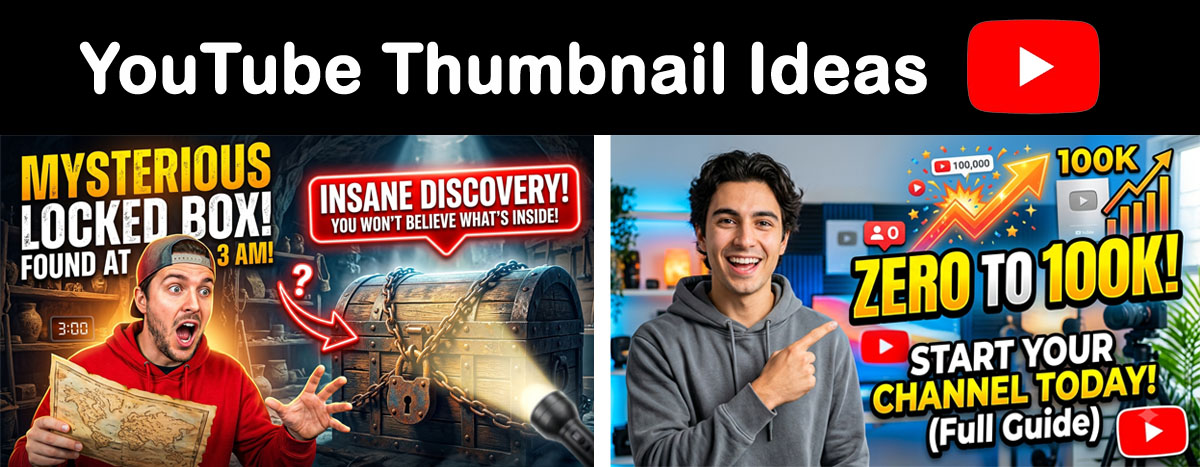
Great title is specific, promises a clear benefit or answer, and avoids being so “clickbaity” that it disappoints the viewer once they click (this hurts your watch time and your channel’s long-term reputation).
Part 4: How to Grow Your YouTube Channel
Growing on YouTube isn’t about luck — it’s about showing up consistently and giving the algorithm reasons to trust you.
1. Consistency Beats Perfection
Posting on a predictable schedule — even once a week — trains both the algorithm and your audience to expect you. Channels that upload sporadically almost always grow slower than channels that show up reliably, even with slightly rougher production quality.
2. Understand What the Algorithm Actually Rewards
YouTube’s recommendation system is built around one core question: will this video keep people watching YouTube longer? That’s why these metrics matter so much:
- Click-through rate (CTR): the percentage of people who see your thumbnail and click it
- Average view duration and audience retention: how long people actually stay watching
- Session time: whether your video leads viewers to watch even more videos afterward
Optimize for these, and the algorithm naturally starts recommending your videos to more people.
3. Use Playlists and Series
Grouping related videos into playlists encourages binge-watching, which boosts your total watch time — a major factor in both algorithmic reach and Partner Program eligibility.
4. Engage With Your Audience
Reply to comments, especially in the first hour after posting. Ask questions in your videos to spark discussion. Community engagement signals to YouTube that your content sparks real interest, and it builds the kind of loyal audience that shows up for everything you post.
5. Collaborate With Other Creators
Partnering with channels of a similar size in your niche exposes you to a new, relevant audience. It’s one of the fastest ways to grow when you’re small, because both channels benefit.
6. Repurpose Content Across Platforms
Turn long-form videos into YouTube Shorts, TikToks, Instagram Reels, or X clips. This multiplies your reach without multiplying your workload, and Shorts in particular can drive huge subscriber growth even from a completely new channel.
7. Study Your Analytics Regularly
Your YouTube Studio analytics tell you exactly where viewers drop off, which traffic sources bring the most views, and which videos are outperforming others. Treat every upload as a small experiment and let the data guide your next move.
Before go through to part 5, you’ll need the fulfill the 1000 subscribers and 4000 watch time to participate the YouTube monetization program.
How to reach 4,000 watch hours faster?
Every YouTuber chasing monetization eventually runs into the same wall: 4,000 public watch hours in 12 months. It sounds intimidating, but watch time isn’t random — it’s the outcome of specific, repeatable habits. Once you understand what actually drives it, hitting this milestone becomes a matter of strategy, not luck.
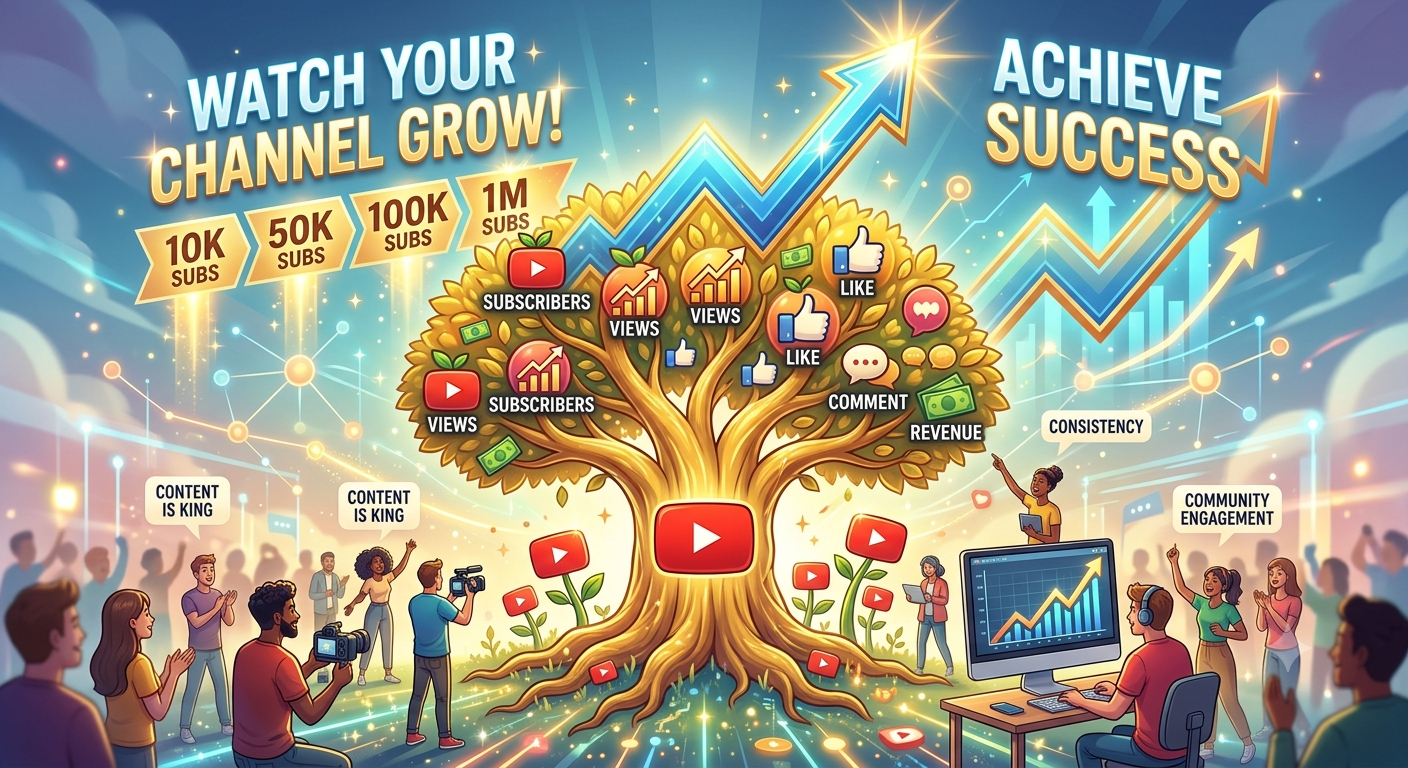
Reaching 4,000 watch hours isn’t about tricking the algorithm — it’s about making videos people genuinely want to keep watching, and giving the algorithm enough consistent, well-retained content to recommend.
Focus on hooks, pacing, structure, and consistency, and the watch hours accumulate as a natural byproduct of making content people don’t want to click away from.
The creators who hit this milestone fastest aren’t necessarily the most talented — they’re the ones who pay close attention to their retention data and keep refining, video after video, until staying to the end feels effortless for the viewer.
What Counts as “Watch Time,” Exactly?
Watch time is simply the total minutes people spend viewing your videos, added up across your whole channel. Ten viewers finishing a 24-minute video equals four hours of watch time on its own.
Two levers control this number:
- How many people watch your videos
- How long they stay once they click
Most beginners chase views alone. Faster-growing channels optimize both sides at once.
1. Make Longer Videos — With Real Retention
Length only helps if people actually stay. A 20-minute video watched at 50% retention beats a 5-minute video watched at 90%, purely on total minutes delivered. Multiply that across thousands of views, and longer, well-paced content builds watch hours far quicker than short clips ever could.
The catch: padding a video just to inflate runtime backfires instantly. Retention drops, and YouTube’s algorithm notices. Choose formats naturally suited to depth — tutorials, breakdowns, case studies, story-driven content — and fill every extra minute with value, not filler.
2. Nail Your First 15 Seconds
Most drop-off happens right at the start. Skip the long “hey guys, welcome back” intros and get straight to the payoff. Tell viewers immediately what they’re about to get and why it’s worth their time. A tighter hook alone can noticeably boost average view duration.
3. Structure for Retention, Not Just Topic
How you build a video matters as much as what it’s about. High-retention videos typically include:
- Tight pacing — cut dead air, filler words, and long pauses
- Visual variety — cut between angles, b-roll, or on-screen text every so often
- Open loops — tease something valuable coming later to keep viewers watching
- Clear chapters — breaking content into sections makes “just one more part” feel effortless
4. Let Playlists Do the Heavy Lifting
When one video autoplays into the next, viewers often binge for far longer than a single upload could hold their attention alone.
Group tutorials, series, or themed content into playlists, and pin your strongest one to your channel homepage so new visitors land directly into a binge path.
5. Build Recurring Series
A standalone video gets watched once. A series builds a habit — viewers return on purpose because they already know what to expect.
That habitual return traffic is one of the most reliable ways to stack watch hours consistently, week after week.
6. Match Titles and Thumbnails to Real Content
A misleading thumbnail might win the click, but it kills retention the moment viewers realize the video didn’t deliver — and that hurts your watch time more than it helps. Aim for accurate curiosity: thumbnails and titles that spark genuine interest without overpromising.
7. Post on a Predictable Schedule
YouTube can only recommend what you give it. Channels that upload consistently — even just once or twice a week — accumulate watch hours faster than sporadic posters, because each new upload is a fresh chance to get recommended and to pull viewers back into older videos.
8. Refresh Your Back Catalog
Older videos quietly keep earning watch hours through search and suggested traffic — if they’re optimized.
Revisit outdated titles, mismatched thumbnails, and thin descriptions. A small refresh can reignite an old video’s performance almost overnight, using content you’ve already created.
9. Use Shorts as a Discovery Funnel
Shorts views don’t count toward long-form watch hours directly, but they’re an excellent top-of-funnel tool.
A viral Short can introduce your channel to thousands of new viewers who then click into your long-form videos — content that does count toward your 4,000-hour goal.
10. Read Your Retention Graphs Like Data
YouTube Studio’s retention graph is one of the most underused tools available. Look for:
- A sharp drop right after the intro → your hook needs work
- A slow, steady decline → your pacing is dragging
- A rewatch spike → that moment resonated, so create more like it
Treat every upload as a small experiment. Small, compounding fixes across many videos add up fast.
11. Collaborate With Similar-Sized Creators
Appearing in another creator’s video (or vice versa) puts your content in front of an audience already interested in your niche. That built-in relevance often converts into a real spike in watch hours, especially for smaller channels still building momentum.
12. Re-Promote What You’ve Already Made
Not everyone finds your channel the day a video goes live.
Resurface older uploads through community posts, Shorts clips, or a “you probably missed this” callout to send fresh traffic — and fresh watch hours — toward content you’ve already invested time in.
How Fast Can You Realistically Hit 4,000 Hours?
There’s no universal timeline. It depends on your niche, video length, upload frequency, and how well you apply retention strategy.
Channels combining longer, well-paced videos with consistent uploads and active promotion tend to reach 4,000 hours significantly faster than those posting occasionally without a plan.
How Long Does YouTube Monetization Review Take?
Once you meet the subscriber and watch-hour requirements and submit your application, YouTube states the review process can take up to 30 days. In reality, timelines vary based on your channel’s history.
- Fast Approvals (3–14 Days) – Channels with clean, original content, no copyright issues, and a straightforward upload history often hear back within one to two weeks.
- Standard Timeline (Up to 30 Days) – Most applications fall into this range, especially channels with a larger back catalog that requires more thorough review.
- Delayed Reviews – Channels with borderline content, unresolved copyright claims, or complex policy questions may take the full 30 days or occasionally longer.
What You Can Do While Waiting?
Keep uploading normally, avoid deleting videos or changing privacy settings, and check your application status anytime in the “Earn” section of YouTube Studio.
Patience pays off — reapplying too early after rejection only resets the clock.
Why YouTube Rejects Monetization Applications (And How to Avoid It)
Hitting 1,000 subscribers and 4,000 watch hours feels like the finish line — but plenty of creators still get rejected from the YouTube Partner Program. Here’s why, broken down clearly.
- Inauthentic or Reused Content: YouTube now closely scrutinizes channels built on AI-generated narration, reaction videos with little original commentary, or clips pulled from other creators. If your content doesn’t show genuine effort or a unique voice, it’s flagged instantly.
- Duplicate or Repetitive Uploads: Posting near-identical videos with minor tweaks — same format, same script structure, no fresh value — signals a low-effort channel rather than a real creative project.
- Copyright Claims and Strikes: Using copyrighted music, footage, or clips without permission is one of the fastest ways to get flagged. Even unresolved claims (not just strikes) can delay or block approval.
- Active Community Guidelines Strikes: Any live strike on your account puts your application on hold until it expires or is successfully appealed.
- Incomplete Channel Setup: Missing two-step verification, an unlinked AdSense account, or unfinished application steps can stall your review entirely — even if your numbers qualify.
- Advertiser-Unfriendly Content: Excessive profanity, violence, misleading claims, or sensitive topics handled irresponsibly can make your channel unsuitable for ads, regardless of your metrics.
- Low-Quality or “Filler” Videos: Very short, low-effort, or clearly mass-produced videos suggest a channel isn’t built for long-term value — a red flag during manual review.
Final Tip – Meeting the numbers only gets you considered — approval depends on your entire channel reflecting real, original, policy-compliant effort. Clean up older videos before applying, not after rejection.
Part 5: 12 Real Ways to Make Money on YouTube
Now for the part you’ve been waiting for. Not all YouTube income streams are created equal. Some pay pennies unless you have millions of views, while others can generate serious income even with a modest, loyal audience.

YouTube isn’t just a place to watch cat videos and gaming highlights anymore — it’s one of the biggest income-generating platforms on the internet. Learn how to make money online from YouTube
Here are twelve legitimate income streams creators use — some available from day one, others that unlock as you grow.
1. Ad Revenue Through the YouTube Partner Program (YPP)
This is the classic way creators earn money — YouTube places ads on your videos and shares a cut of the revenue with you (creators typically keep the majority share of ad revenue). As of 2026, YouTube has a two-tier system:
- Early Access tier: 500 subscribers, at least 3 public uploads in the last 90 days, and either 3,000 watch hours or 3 million Shorts views in the past 90 days. This tier doesn’t unlock ad revenue yet, but it does open up fan-funding features like Super Thanks and Channel Memberships.
- Full monetization tier: 1,000 subscribers plus either 4,000 valid public watch hours in the past 12 months, or 10 million valid public Shorts views in the past 90 days. This unlocks full ad revenue, YouTube Premium revenue share, and every other monetization feature on the platform.
You’ll also need two-step verification enabled on your account and no active Community Guidelines strikes. Once eligible, you apply through the “Earn” tab in YouTube Studio, link an AdSense account, and YouTube reviews your channel — usually within a few weeks — to confirm it follows their monetization policies before turning ads on.
2. YouTube Shorts Monetization
Shorts have their own revenue-sharing structure through a shared “Creator Pool,” separate from long-form ad revenue.
If you’re fully monetized, your Shorts earn a slice of that pool based on your share of total Shorts views.
Because Shorts can rack up views fast, even brand-new creators sometimes reach monetization thresholds through Shorts alone, without ever posting a long-form video.
3. Channel Memberships
Once eligible, you can offer paid monthly memberships directly on your channel, giving subscribers perks like custom badges, emojis, exclusive posts, or members-only videos.
This creates predictable, recurring income instead of relying purely on unpredictable ad views.
4. Super Chat, Super Stickers, and Super Thanks
During live streams, viewers can pay to have their message highlighted in the chat (Super Chat) or send an animated sticker (Super Stickers).
Super Thanks lets viewers tip you directly on any regular video, almost like a digital “buy me a coffee” button.
5. Affiliate Marketing
You recommend products or tools relevant to your niche and include affiliate links in your video description.
Every time someone buys through your link, you earn a commission — often without needing any minimum subscriber count at all, which makes this one of the best ways to earn before you’re even monetized on YouTube itself. Tech reviewers, beauty channels, and gaming creators use this method heavily, but it works in nearly every niche.
6. Brand Sponsorships and Paid Promotions
Once you have an engaged audience, brands will pay you directly to feature their product or service in a video — either as a dedicated video or a short segment within one.
Sponsorship rates vary enormously depending on niche, engagement rate, and audience size, but this tends to become one of the biggest income sources for mid-sized and large channels, often outperforming ad revenue entirely.
7. Selling Your Own Digital Products
Ebooks, online courses, templates, presets, stock footage, or printables — if you have expertise, you can package it and sell it directly to your audience.
Digital products have no shipping costs and can be sold repeatedly with zero extra production cost, making them one of the most profitable income streams per sale.
8. Selling Physical Merchandise
T-shirts, mugs, phone cases, or niche-specific products carrying your channel’s branding or catchphrases.
YouTube’s built-in Shopping feature lets you showcase merchandise directly on your video pages, or you can use print-on-demand services like Printful so you never have to handle inventory yourself.
9. Crowdfunding and Fan Support Platforms
Platforms like Patreon let your most dedicated fans support you monthly in exchange for perks like early access, bonus content, or behind-the-scenes updates.
This works especially well for creators making educational, artistic, or niche content where a smaller but highly loyal audience is willing to pay for more.
10. Licensing Your Content
If you create viral, newsworthy, or highly shareable footage (funny moments, unusual events, viral clips), media outlets and video licensing agencies will pay to use your footage in news broadcasts, TV shows, or online publications.
11. Using YouTube as a Portfolio to Land Freelance or Consulting Work
Many creators use their channel less as a direct income source and more as proof of expertise. A well-produced channel in areas like marketing, coding, design, real estate, or coaching can generate high-value client inquiries — sometimes worth far more than ad revenue itself.
12. Building and Selling Your Own Brand or Business
Some of the biggest YouTube success stories involve creators who used their channel to launch an entire company — a skincare line, a software product, a coaching program, or a subscription box. The channel becomes the marketing engine, and the business becomes the real income source.
Part 6: Advanced Strategies for Scaling Your Income
Once you’ve got the basics working, here’s how experienced creators push their channels further:
Diversify your income streams early. Don’t rely on ad revenue alone — it fluctuates with the season, your niche, and even advertiser demand. Creators with 4–5 income streams running simultaneously tend to have far more stable earnings.
Build an email list. Unlike YouTube subscribers, an email list is an audience you own directly — useful when launching products, courses, or promotions.
Outsource what drains your time. As income grows, many creators hire editors, thumbnail designers, or scriptwriters, freeing themselves up to focus on ideation and on-camera work — the parts only they can do.
Double down on what’s already working. Look at your top-performing videos and create more content in that exact style or topic cluster rather than constantly reinventing your format.
Run multiple channels strategically. Some creators run a second or third channel in a related niche once their main channel matures, multiplying their reach and income without starting completely from scratch.
Negotiate sponsorships directly. As your channel grows, reach out to brands yourself instead of waiting to be discovered — many creators land their best deals this way rather than through agencies alone.
Common Mistakes That Slow Creators Down
- Quitting too early, before the algorithm has enough data to know who to show your videos to
- Chasing trends that don’t fit your niche, which confuses your audience
- Ignoring analytics and continuing to make videos that clearly aren’t performing
- Reusing content without meaningful changes — YouTube’s monetization policies specifically flag content with minimal original input, so always add real value, commentary, or production effort
- Obsessing over equipment instead of content quality and consistency
- Not having a clear call-to-action, leaving viewers unsure what to do next
Final Thoughts
Making money on YouTube isn’t about luck — it’s about treating your channel like a real project: choosing a niche you can commit to, consistently publishing videos that deliver genuine value, studying what your audience responds to, and layering multiple income streams on top of your growing audience.
Some creators see their first payout within months; others take a year or more before things click.
Either way, the creators who stick around, keep improving, and stay consistent are the ones who eventually turn a hobby into a genuine income — and sometimes, into a full-time career.
Start with one video. Then another. The channel that will eventually pay your bills is built one upload at a time.