

Many people use the terms ” startup “ and ” business “ interchangeably. While both involve selling products or services to generate revenue, they are fundamentally different to their purpose, growth strategy, funding, and long-term vision.
Every startup is a business, but not every business is a startup.
A bakery and a biotech app might both start in someone’s garage, but they’re playing entirely different games, with different rules, different risks, and different endings.
Understanding these differences is essential before launching your entrepreneurial journey.
Confusing the two is one of the quickest ways to derail a venture before it ever gains momentum. Understanding these core distinctions determines how you raise capital, hire talent, structure operations, and measure progress.
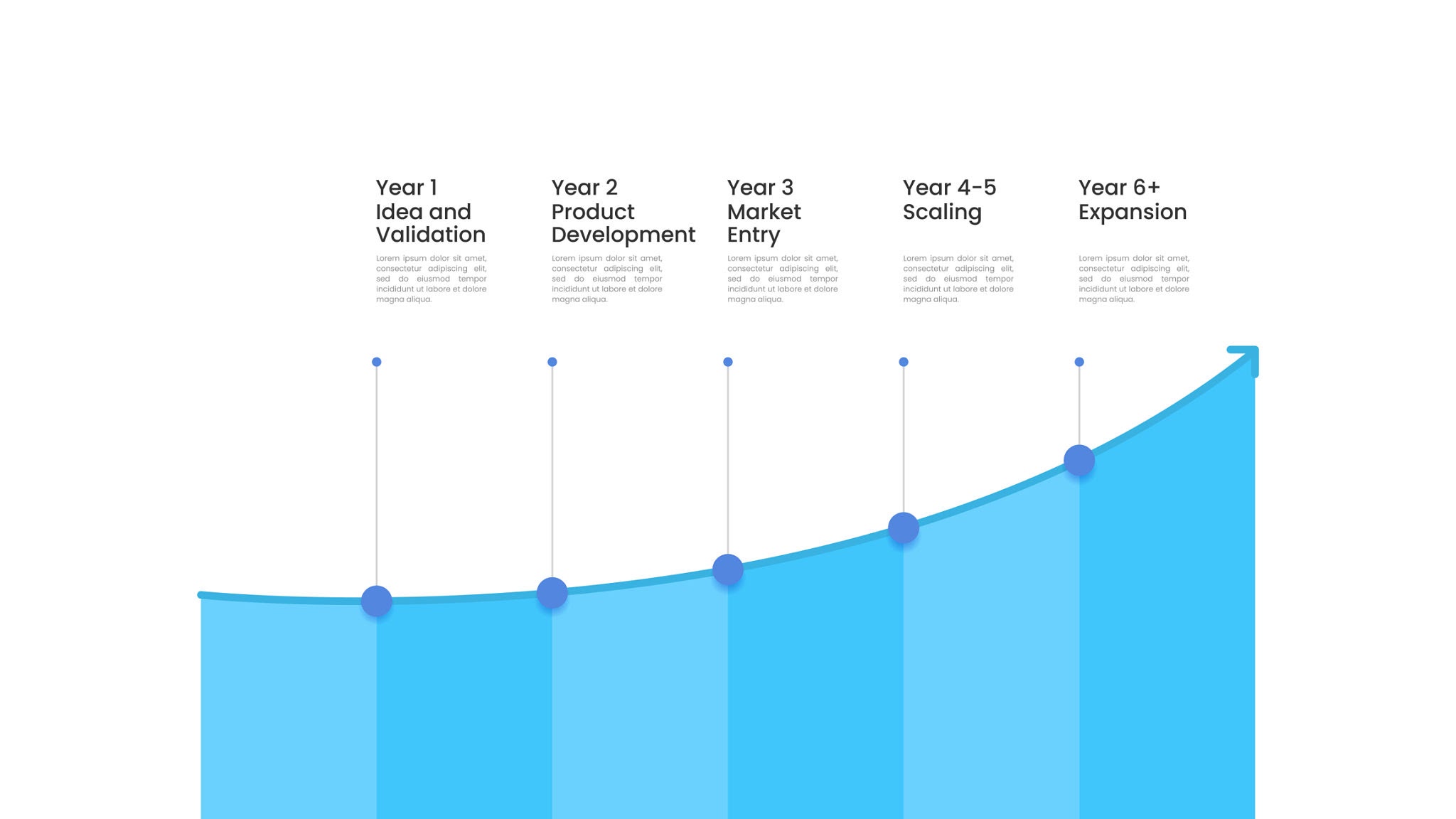
The Exponential Trajectory of a High-Growth Startup. Source: Pasek Renti / Getty Images
Whether you dream of building the next billion-dollar tech company or owning a profitable local business, this guide explains everything you need to know about startups vs. businesses in simple, practical language.
Table of Contents
What Is a Startup?
A startup is a temporary organization designed to search for a repeatable, highly scalable business model under conditions of extreme uncertainty. Rather than opening shop with a known solution, a startup creates a novel product, service, or technology meant to disrupt an industry or create an entirely new market.
Startups often operate in uncertain markets where founders test ideas, validate customer demand, and continuously improve their offerings.
Unlike traditional businesses, startups are built with one primary goal: rapid growth, product development, customer acquisition, and scalability.
Many startups begin with limited resources but aim to expand nationally or globally.
Characteristics of a Startup
- Focuses on innovation
- Solves a unique problem
- Designed for rapid scaling
- High risk and high reward
- Often seeks investors
- Prioritizes growth before profits
- Frequently adapts its business model
What Is a Traditional Business?
A traditional business (often a small business or franchise) operates within an established market using a proven, repeatable business model. The primary goal is immediate profitability, steady revenue generation, and sustainable local or regional growth.
Examples include:
- Restaurants
- Grocery stores
- Retail shops
- Construction companies
- Consulting firms
- Dental clinics
- Local service providers
Unlike startups, traditional businesses emphasize sustainability, predictable income, and steady expansion.
The 6 Pillars of Divergence
To fully grasp the difference, examine how startups and traditional businesses function across six critical dimensions:
| Dimension | Traditional Business | High-Growth Startup |
| Primary Objective | Steady profitability & long-term stability | Rapid market takeover & massive scale |
| Growth Trajectory | Linear (e.g., 5–10% year-over-year) | Exponential (e.g., 10x or 100x growth) |
| Funding Mechanism | Bank loans, revenue, personal savings, SBA | Venture capital, angel investors, equity |
| Market Scope | Local, regional, or well-defined niche | Global, borderless, or newly created market |
| Risk Profile | Low to moderate (tested models) | High to extreme (untested concepts) |
| Exit Strategy | Multigenerational ownership or acquisition sale | IPO, merger, or strategic buyout |
The Core Distinction: Growth vs. Stability
At the heart of it, a startup is a temporary organization built to search for a scalable, repeatable business model. A traditional business is a permanent organization built to execute a known, proven business model.
That single sentence explains almost everything else.
A startup doesn’t yet know if its idea works. It’s testing, pivoting, and iterating in pursuit of massive, exponential growth.
But A business already knows its idea works. It’s refining execution, not searching for validation.
Think of it this way: a business owner opens a coffee shop because coffee shops are a proven concept — people want coffee, they’ll pay for it, and the math is predictable.
But a startup founder builds an app that reimagines how people order coffee across an entire city, with no guarantee the model will work at all.
One is executing a playbook.
The other is writing one.
Breakdown of Key Differences
Let’s break down exactly where startups and businesses diverge — and why understanding that gap could save you years of wasted effort.
1. Purpose and Intent
- Business: Built to solve an immediate, well-understood problem using an existing solution. Its mission is to generate reliable revenue by serving customers consistently while maximizing profits.
- Startup: Built to solve a problem in a new, untested way — often one that doesn’t fully exist yet. The goal is disruption and rapid scale, with profitability arriving later, if at all, in the early years.
Examples include: AI software, FinTech platforms, Health technology, SaaS products, Mobile applications, etc.
A business asks, “How do I do this well?”
A startup asks, “Should this even be done — and if so, how?”
2. Growth Trajectory
Growth is everything.
This is the sharpest line between the two.
Businesses typically grow linearly. Revenue climbs steadily as the owner adds resources — more staff, more locations, more inventory. Growth is tied directly to input.
Startups aim for exponential growth. The entire model is designed to scale without a proportional increase in cost or headcount. A local business might grow from 10 to 20 customers by working twice as hard. A startup might grow from 10 to 10,000 users without touching its core team, because the product — not manual effort — drives expansion.
This is why a food truck is a business, but a food delivery platform is a startup. Same industry, radically different growth mechanics.
3. Funding and Financial Structure
Traditional businesses are typically funded through personal savings, bank loans, or reinvested profits. The financial goal is sustainable cash flow — money in, money out, with a healthy margin.
Startups often chase venture capital, angel investment, or accelerator funding.
Investors aren’t betting on stability; they’re betting on outsized returns. This changes everything about how a startup operates.
It can burn cash for years, chasing growth over profit, because investors are betting on a future payoff, not current earnings.
That’s also why startups face brutal failure rates. Most fail — not because the founders are incompetent, but because the model demands they take risks a traditional business owner would never touch.
4. Risk Tolerance
Businesses are built around minimizing risk. A well-run business avoids unnecessary gambles because its survival depends on predictable revenue.
Startups are built around calculated risk-taking. Uncertainty isn’t a bug — it’s the entire premise. A startup exists because someone believed an unproven idea was worth betting everything on.
This difference shapes company culture from day one. Business employees are usually hired for reliability and consistency. Startup employees are hired for adaptability because the job description might change entirely in six months.
5. Innovation vs. Execution
Innovation separates startups from ordinary businesses.
Traditional businesses generally improve proven concepts rather than inventing new ones.
For example:
Opening another bakery in your city is a business.
Creating AI-powered robotic baking machines that reduce production costs by 80% could become a startup.
A startup succeeds by innovating: creating something that didn’t exist before, or radically improving on what does. Innovation is optional for a business. It’s mandatory for a startup.
Startups often introduce:
- New technology
- New business models
- Better customer experiences
- Disruptive solutions
- Market-changing ideas
This is why startups so often target industries ripe for disruption — transportation, banking, healthcare — while businesses thrive in stable, established markets like retail, food service, or local trades.
6. Lifespan and End Goal
A traditional business is built for long-term stability and sustained success. Owners focus on creating a company that can operate for decades, generate consistent profits, and become a valuable asset to pass on to future generations, sell, or continue managing indefinitely.
A startup, in contrast, begins with rapid growth and a defined long-term objective. Founders often aim to scale the company quickly before achieving a major milestone, such as an acquisition by a larger company, an initial public offering (IPO), or evolving into a mature enterprise. Once a startup establishes a proven, scalable business model and reaches operational stability, it transitions from a startup into a traditional business.
That’s the quiet irony most people miss — every successful startup eventually becomes a business. The startup phase is temporary by design.
7. Team Structure and Culture
Traditional businesses organize teams around clearly defined roles such as manager, cashier, and technician.
Employees typically focus on specific responsibilities, and their job descriptions remain consistent over time. Startups, however, thrive on flexibility.
Team members often take on multiple responsibilities, especially during the early stages. A marketing specialist may also provide customer support, while a software developer might help pitch the company to investors.
In this environment, adaptability matters far more than job titles because the organization is constantly evolving.
This flexibility also shapes startup culture.
Teams move quickly, make decisions faster, and operate with fewer layers of management.
Instead of fearing mistakes, startups treat them as valuable learning opportunities that drive innovation, improve products, and accelerate growth.
8. Measuring Success
Businesses define success by generating healthy profit margins, retaining loyal customers, and achieving steady revenue growth. Startups evaluate success through a different lens, especially in their early stages.
They prioritize user growth, expanding market share, achieving product-market fit, and building investor confidence over immediate profitability.
A startup that doubles its user base while operating at a loss can still be a major success because it’s building momentum for future growth.
By contrast, a traditional business that consistently loses money and fails to generate profits will likely struggle to survive and is generally considered unsuccessful.
Common Myths About Startups and Businesses
- Every New Business Is a Startup
Not true. A new coffee shop is a new business, but it isn’t a startup unless it’s built around an innovative, scalable model.
- Startups Become Profitable Quickly
Many startups operate for years before achieving profitability because they prioritize growth and market share.
- Traditional Businesses Can’t Innovate
Established businesses can innovate by improving products, adopting new technologies, and refining customer experiences.
- Only Tech Companies Can Be Startups
Technology is common, but startups also emerge in healthcare, education, agriculture, finance, logistics, and consumer products.
- Businesses Can’t Scale
While traditional businesses often scale more slowly, many expand successfully through franchising, licensing, or digital transformation.
Which One Should You Build?
Neither path is superior — they solve different problems for different people.
The right choice depends on your goals, risk tolerance, and vision.
A startup may be the better path if you:
- Want to solve a large-scale problem
- Enjoy innovation and experimentation
- Are comfortable with uncertainty
- Aspire to build a global company
- Are willing to seek outside investment
A traditional business may suit you if you:
- Prefer financial stability
- Want steady profits
- Value full ownership and control
- Enjoy serving a local or niche market
- Favor predictable growth over rapid expansion
Neither model is inherently better. Success comes from choosing the one that aligns with your strengths and long-term objectives.
Frequently Asked Questions (FAQs)
Is every startup a business?
Yes. Every startup is a business because it sells a product or service. However, not every business is a startup. Startups are specifically designed for innovation and rapid, scalable growth.
Which has more risk: a startup or a traditional business?
Startups generally involve greater risk due to uncertain markets, evolving business models, and aggressive growth strategies. Traditional businesses typically operate with more predictable demand and established practices.
Do startups always need investors?
No. Some founders bootstrap their startups using personal funds and early revenue. However, external investment is common when rapid expansion requires significant capital.
Can a startup become a traditional business?
Absolutely. Once a startup validates its model, achieves sustainable profitability, and shifts its focus from experimentation to operational excellence, it often begins to resemble a traditional business.
Which option is better for first-time entrepreneurs?
It depends on your goals. If you value stability, a traditional business may offer a smoother learning curve. If you’re passionate about innovation and comfortable with uncertainty, building a startup could be the right challenge.
The Bottom Line
The difference between a startup and a traditional business extends far beyond age or company size. It reflects a fundamentally different approach to entrepreneurship.
A startup drives innovation, scales rapidly, and targets large markets—even if doing so requires taking greater risks and delaying profitability. In contrast, a traditional business delivers consistent value, generates reliable income, and builds sustainable growth through steady operations and long-term customer relationships.
Neither path guarantees success, and neither is superior in every situation. The best choice depends on your vision, resources, and willingness to embrace uncertainty. By understanding the distinctions in funding, scalability, profitability, leadership, and long-term strategy, you can make informed decisions and build an enterprise that aligns with your ambitions.
Whether your goal is to launch the next breakthrough platform or create a respected local company, success starts with selecting the business model that fits your purpose—and executing it with discipline, resilience, and a relentless focus on serving your customers.