

It’s no secret that Google employee benefits and perks are a massive draw, but behind the famous free food, colorful office slides, free snacks everywhere you look, there’s a surprisingly deep safety net. Here is how those Googlers benefits actually translate to real life, broken down into the things that keep your life running smoothly. And while those things aren’t myths, they only scratch the surface of what actually makes Google’s employee experience so widely admired.
Google has built a reputation over the years for treating its employees well — really well.
The company backs that reputation with a genuinely comprehensive benefits package that touches nearly every part of an employee’s life.
Behind the playful office aesthetic sits one of the most extensive and thoughtfully constructed benefits packages in corporate America, one that touches nearly every dimension of an employee’s life — their finances, their health, their family, their personal growth, and even the quality of their everyday routine.
Naturally, exact offerings shift depending on where you’re located, what role you’re in, and whether you’re full-time or contract — but here’s a broader look at 30 benefits that regularly come up when current and former Googlers talk about why they stayed.
Table of Contents
What It’s Really Like to Work at Google: 30 Perks That Make the Job Worth It!
Google has consistently ranked near the top of “best places to work” lists for well over a decade, and it’s not just because of the free food (though that certainly helps).
It’s because the company has approached employee benefits as a long-term investment rather than a recruiting gimmick.
The logic is fairly simple: when people don’t have to worry as much about medical bills, retirement savings, or finding quality childcare leave, they can focus more energy on doing meaningful work — and they tend to stick around longer while doing it.
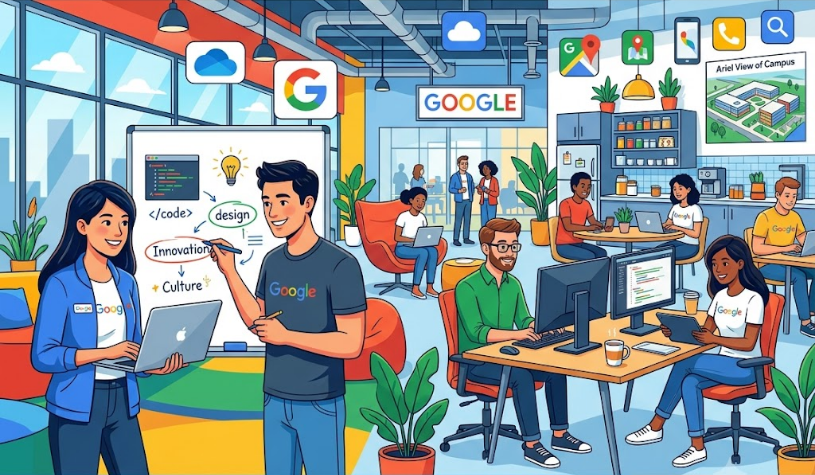
Of course, it’s worth being upfront about something important: not every benefit applies equally to every employee.
Google’s offerings can shift quite a bit depending on your specific role, your employment classification (full-time employee vs. contractor, for instance), your location, and even which subsidiary under the Alphabet umbrella technically employs you.
A software engineer working at the Mountain View headquarters may have access to a slightly different set of perks than someone working at a smaller regional office.
Still, there’s a broad, recognizable core of benefits that shows up again and again across the company, and that’s what this breakdown focuses on.
Let’s walk through them in detail, organized by category, along with some added context on why each one matters and how it compares to what’s typical elsewhere in the industry.
Financial and Compensation Benefits: Building Long-Term Wealth, Not Just a Paycheck
Google’s financial benefits are designed with a longer time horizon in mind.
It’s reputation for employee benefits is practically the stuff of tech industry legend at this point — and it’s not by accident.
The company builds its entire rewards philosophy around a simple idea: the harder and better you work, the more you should get back for it.
That’s the “pay for performance” mindset in a nutshell.
But Google doesn’t stop at just handing out bigger paychecks to top performers.
It backs that philosophy up with a genuinely thoughtful approach to taking care of people — covering everything from their physical health to their emotional wellbeing to the parts of life that have nothing to do with work at all.
1. Competitive Base Salary
Google’s pay bands are structured around both role and geography, which means compensation isn’t a flat number applied company-wide.
Someone working in a high-cost city like San Francisco or New York will typically see a different base salary than someone in a lower cost-of-living region, reflecting local market realities rather than a one-size-fits-all approach.
This geographic adjustment is common among large tech employers, but Google’s bands are generally considered to sit at or near the top of the industry.
2. Annual Performance Bonuses
Through an internal review framework often referred to as GRAD (Google Reviews and Development), employees are evaluated periodically, and bonus payouts are tied to a blend of individual contribution and overall company performance.
This dual structure means that even in a strong year for an individual employee, company-wide financial performance can still influence the final bonus number — a reminder that everyone’s outcomes are somewhat interconnected.
3. Google Stock Units (GSUs)
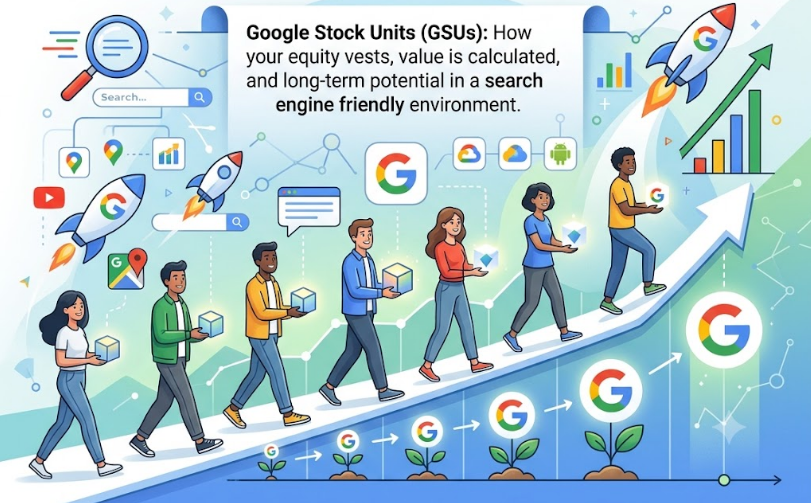 Equity compensation is a major part of how Google rewards employees, particularly at more senior levels. GSUs typically vest over a period of years, giving employees a growing financial stake in the company over time.
This structure is intentional — it encourages people to think about the company’s long-term health, not just their day-to-day tasks, and it can meaningfully boost total compensation well beyond base salary alone.
4. 401(k) Matching
Retirement planning gets real support here. Google offers an employer match on 401(k) contributions that’s considered generous relative to industry norms, helping employees build savings that compound over the course of their careers.
5. Mega Backdoor Roth Access
This is a more advanced financial planning tool, and its inclusion says something about the sophistication of Google’s benefits design.
The Mega Backdoor Roth strategy allows employees to contribute additional after-tax dollars into their retirement accounts beyond standard IRS limits, then convert those funds into a Roth account for tax-advantaged growth.
It’s a niche but valuable perk primarily used by employees who are already maxing out more traditional retirement contributions and want to save even more efficiently.
6. Charitable Donation Matching
Google will match employee donations to eligible nonprofit organizations, up to $10,000 per person annually.
This effectively doubles an employee’s charitable impact and reflects a broader effort many large tech companies make to encourage employee philanthropy without dictating which causes people should support.
7. Survivor Income Benefit
This is one of the more distinctive, and honestly less commonly known, benefits on the list.
In the event that an employee passes away, Google provides continued income support to a surviving spouse or partner — reportedly for up to ten years — along with additional monthly payments for any dependent children.
Very few companies offer anything close to this level of long-term family protection, and it’s often cited by employees and industry observers alike as a standout example of Google thinking beyond the individual worker to their broader family unit.
Health and Wellness Benefits: Supporting the Whole Person
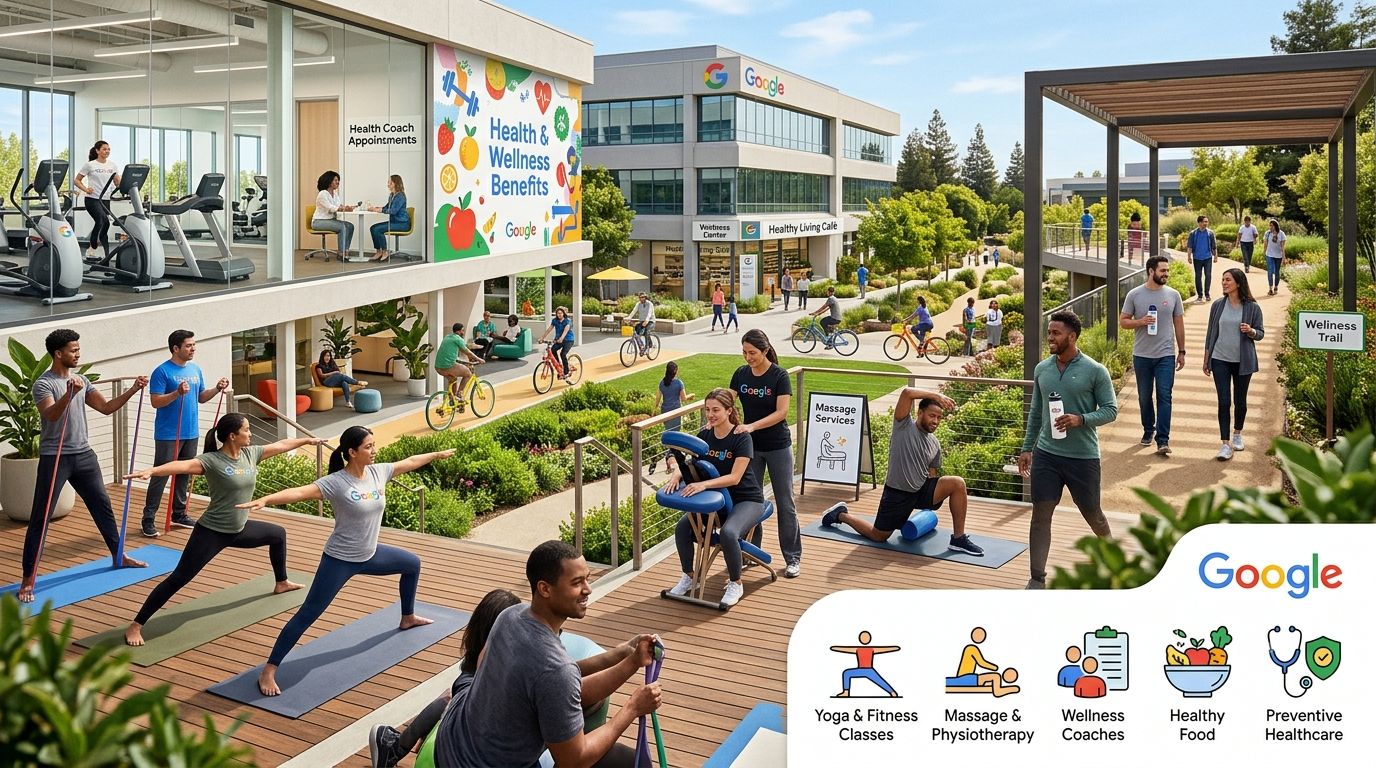
If there’s one area where Google really puts its money where its mouth is, it’s employee health.
The company treats wellness not as a checkbox on an HR form, but as something woven into daily life at the office — physically, mentally, and financially.
Google automatically provides basic life insurance — typically around three times an employee’s salary — completely free of charge.
Google offers a range of insurance plans that go well beyond the basics, giving employees options to cover themselves and, in most cases, their families too.
At many of Google’s bigger offices, you don’t need to book time off just to see a doctor. On-site wellness centers give employees access to physicians, nurses, and even physical therapists without ever leaving work — a small convenience that saves a surprising amount of time and stress over the course of a year.
8. Comprehensive Medical Insurance
Employees typically have access to a range of medical, dental, and vision insurance plans, often extending coverage to spouses, domestic partners, and children as well.
Having multiple plan tiers allows employees to choose coverage that fits their specific needs and budget.
9. On-Site Wellness Centers
At many of Google’s larger campuses, employees can see a doctor, nurse, or physical therapist without ever leaving the building.
This kind of on-site healthcare access can save employees significant time and hassle, particularly for routine check-ups or minor health concerns that might otherwise require taking time off to visit an outside clinic.
10. Mental Health Resources
Recognizing that mental health is just as important as physical health, Google provides dedicated programs and app-based tools to support employees dealing with stress, anxiety, or other mental health challenges.
This has become an increasingly important benefit across the tech industry in recent years, particularly following widespread burnout concerns during and after the pandemic.
11. Life Insurance at Google
Among all the benefits Google offers, life insurance might be the one employees think about the least — right up until they need it, or until they stop to actually consider what it means for their family.
It’s not flashy like free food or nap pods, but it’s arguably one of the more meaningful protections built into the company’s overall benefits package.
Unlike some benefits that require enrollment decisions or additional payroll deductions, Google typically provides basic life insurance to employees automatically, free of charge.
There’s no need to opt in, fill out extensive paperwork, or pay a monthly premium out of pocket for the baseline coverage — it’s simply part of the package from the moment someone joins the company.
12. Long-Term Disability Coverage
Most people plan their finances around the assumption that they’ll be able to keep working, year after year, without major interruption.
But illness and injury don’t always cooperate with that assumption, and when a serious health issue keeps someone out of work for months or even years, the financial impact can be devastating.
That’s exactly the kind of situation long-term disability coverage is designed to soften — and it’s a benefit Google includes as a standard part of its employee protections.
13. Nap Pods
If there’s one Google perk that’s become genuinely iconic — showing up in documentaries, late-night talk show jokes, and countless “wildest office perks” listicles — it’s the nap pod.
But behind the novelty factor is a benefit that reflects something Google has taken more seriously than most companies: the idea that rested employees are simply better at their jobs.
In the grand scheme of Google’s total benefits package — equity compensation, healthcare, parental leave, and so on — nap pods are objectively one of the smaller, lower-cost perks the company offers.
But they’ve become something of a symbol for Google’s broader workplace philosophy: that a good employer pays attention not just to big-picture financial security, but also to the small, human realities of getting through a demanding workday.
14. On-Site Fitness Facilities
For a lot of working adults, staying consistently active is one of the first things to slip when a job gets demanding.
Between long hours, commutes, and general fatigue, finding time and motivation for a gym session can feel like just one more thing on an already full plate.
Google’s answer to that problem has been fairly direct: bring the gym to the office, so employees don’t have to choose between fitness and everything else competing for their time.
Work-Life Balance: Where Google Actually Delivers on the Promise

A lot of companies talk about work-life balance in their recruiting materials and then quietly expect employees to answer emails at midnight anyway.
Google has built its reputation partly by actually backing up the talk with policies that give people real room to breathe — and it shows in how consistently the company gets praised for this, even by employees who’ve since moved on to other jobs.
Google’s hybrid work model lets employees split their time between the office and home, and importantly, it doesn’t frame remote work as some kind of consolation prize.
The “Work from Anywhere” policy is one of those perks that sounds almost too good to be true until you realize it’s real.
The famous 20% Time policy has become almost mythical in tech circles, and for good reason.
The concept is simple: employees are encouraged to spend a slice of their working hours on projects they’re personally passionate about, even if those projects fall outside their official job description.
Beyond parental leave, Google also offers paid caregiving leave for employees who need to step away temporarily to care for an aging parent, a sick spouse, or another family member who needs support.
Taken as a whole, these policies reflect something more than generosity for its own sake — they reflect an understanding that employees who feel supported outside of work tend to bring more energy, focus, and loyalty to their work.
It’s a lesson a lot of companies are still catching up on, and it’s a big part of why Google continues to set the benchmark for what work-life balance can actually look like in practice.
15. Hybrid Work Model
Flexibility between in-office and remote work has become increasingly standard across the tech industry, and Google offers hybrid arrangements that vary somewhat by team and role.
The way people think about “going to work” has shifted dramatically over the past several years, and Google has adjusted its approach right along with it.
Rather than forcing a strict return to five-day office weeks or swinging fully remote, the company has settled into a hybrid model — one that tries to capture the benefits of in-person collaboration without ignoring how much flexibility employees have come to expect and value.
16. “Work from Anywhere” Weeks
Employees are typically given up to four weeks per year during which they can work from virtually any location of their choosing.
This kind of flexibility has become especially valuable as more employees value the ability to travel, spend extended time with family, or simply change their scenery without using up traditional vacation days.
17. The 20% Time Policy
This is one of Google’s most famous cultural traditions. The idea is that employees can dedicate a portion of their working hours — historically framed as roughly 20% — to personal passion projects that may not be part of their core job responsibilities.
Some well-known Google products, including early versions of Gmail and AdSense, are often credited to this kind of exploratory time, though how consistently the policy is applied has varied across teams and over the years.
18. Generous Paid Time Off
Standard vacation days, sick leave, and paid holidays round out the more conventional side of Google’s time-off offerings, giving employees ample opportunity to rest and recharge throughout the year.
19. Paid Parental Leave
New parents — whether through birth, adoption, or fostering — receive substantial paid leave to bond with their new child.
Google’s parental leave policies have often been cited as more generous than the U.S. average, which is notable given that the United States remains one of the few developed countries without federally mandated paid parental leave.
20. Bereavement and Jury Duty Leave
Employees receive paid time off to handle the loss of a loved one or to fulfill civic responsibilities like jury duty, without having to sacrifice income during those already difficult or disruptive periods.
21. Caregiving Leave
Caregiving Leave at Google: Support for the Responsibilities That Extend Beyond Parenthood.
Most conversations about family-related workplace benefits tend to focus heavily on parental leave — and understandably so, since welcoming a new child is one of the most common life events employees navigate.
But caregiving responsibilities don’t stop at parenthood.
Employees also find themselves caring for aging parents, sick spouses, or other family members who need support, often with little warning.
Google’s caregiving leave policy is built specifically to address that gap.
Professional Development: Investing in Employees’ Growth at Google
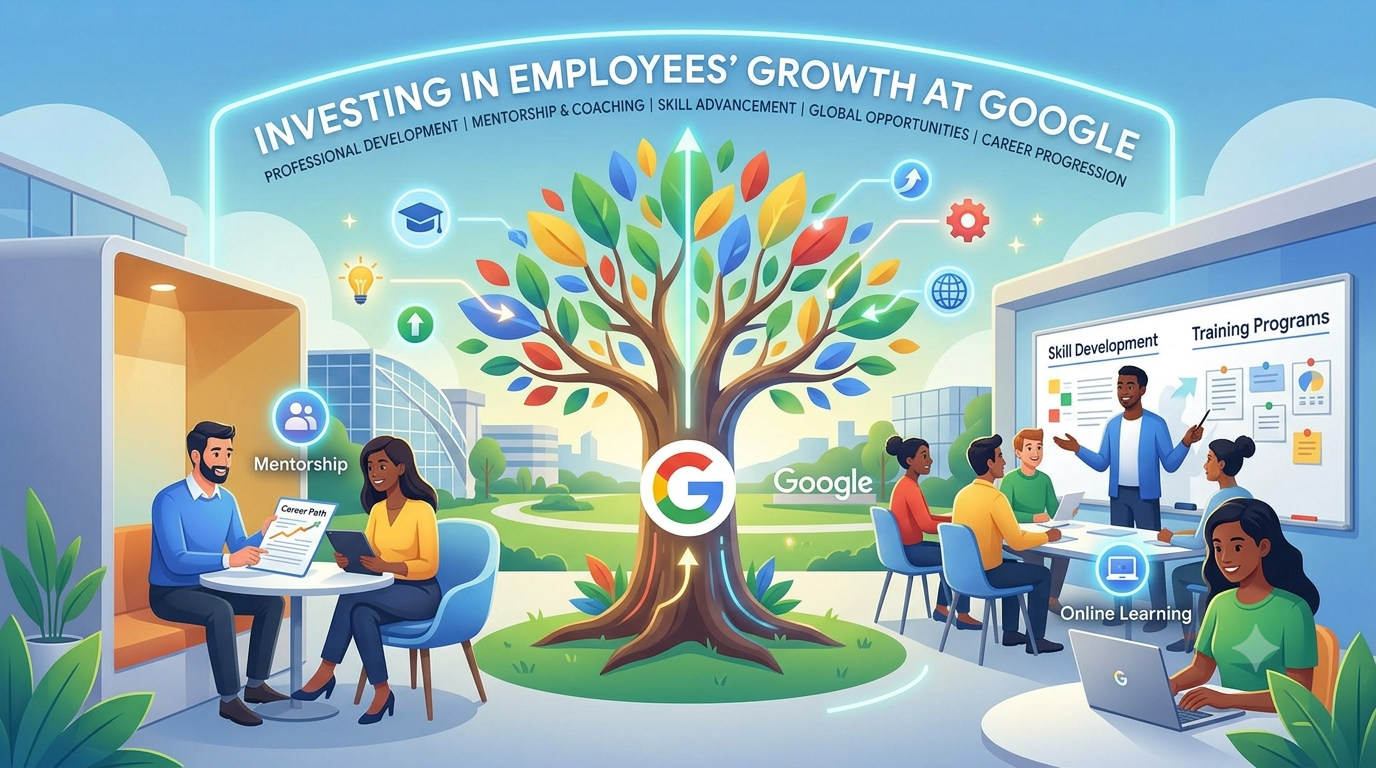
Google’s benefits don’t end at health insurance and free lunches — the company puts real weight behind helping people grow, both in their current role and well beyond it.
There’s a genuine belief baked into the culture that if you invest in someone’s skills today, you get a sharper, more capable, more loyal employee tomorrow.
Here’s a closer look at how that plays out in practice.
One of the more underrated perks of working at Google is the sheer access to knowledge.
The company regularly hosts internal talks and seminars featuring respected researchers, authors, and leaders from a wide range of fields — not just tech.
Employees get to hear directly from people whose work they might otherwise only read about, all without leaving the building.
22. Tuition Reimbursement
Employees pursuing further education, whether through degree programs or specialized coursework, can receive financial assistance to help cover the cost.
This kind of support can make a meaningful difference for employees looking to build new skills or credentials without taking on significant personal debt.
23. Learning Stipends for Self-Directed Growth
Not everyone wants to sit in a classroom, and Google seems to get that.
Employees get access to funding and online learning platforms so they can build skills at their own pace, on their own terms. Want to learn a new programming language, sharpen your data analysis skills, or pick up a certification in project management?
The resources are there, and the direction is largely up to the employee.
24. Internal Seminars
Google regularly hosts talks and seminars featuring respected experts, researchers, and industry leaders from a wide range of fields.
These sessions give employees direct access to insights and perspectives they might not otherwise encounter, all without needing to leave campus.
25. Workshops and Makerspaces
For the more hands-on thinkers, some Google offices include workshops and makerspaces stocked with tools like 3D printers and machine shop equipment.
This isn’t just for hardware engineers, either — plenty of employees use these spaces to prototype personal projects, experiment with new ideas, or simply build something for the fun of it.
It’s a tangible way the company encourages curiosity outside the boundaries of a typical job description.
Everyday Office Perks: The Small Moments That Shape Daily Life at Google
Not every benefit at Google is about long-term financial security or career advancement.
Some of it is just about making the day-to-day experience of showing up to work genuinely pleasant — and this is the category that tends to get the most attention from outsiders, probably because it’s the most visible and easiest to imagine.
Here’s a closer look at what that actually looks like in practice.
26. Free Gourmet Food, Everywhere
This might be Google’s most talked-about perk of all, and it’s earned that reputation.
On-site cafes, micro-kitchens, and full restaurants are stocked throughout the day with everything from healthy grab-and-go snacks to chef-prepared meals, often reflecting a wide range of cuisines and dietary needs.
Employees don’t have to think about packing lunch, hunting down a decent restaurant nearby, or spending money on food they’d otherwise have to plan for themselves.
Beyond convenience, it also creates a natural gathering point — some of the best informal conversations and cross-team connections happen over a shared meal in the cafeteria rather than in a scheduled meeting.
27. Round-the-Clock Tech Support
Anyone who’s dealt with a frozen laptop right before a big presentation knows how disruptive tech issues can be.
Google’s TechStop service offers on-site technical support at pretty much any hour, so employees aren’t left waiting on a ticket system or troubleshooting alone.
It’s a small thing until it isn’t — and having reliable, immediate help nearby can save hours of lost productivity and a fair amount of frustration.
28. A Genuinely Pet-Friendly Environment
At select Google offices, employees are welcome to bring their dogs to work.
Beyond just being a nice perk for pet owners, there’s something to the atmosphere it creates — offices with pets around tend to feel a little less sterile and corporate.
It having a dog wander by during a stressful afternoon has a way of lightening the mood.
It’s a small detail, but it contributes to an overall sense that the workplace is designed around real human (and occasionally canine) comfort, not just efficiency.
29. Everyday Discounts That Add Up
Google employees often get access to special pricing on things like electronics, travel bookings, dining, insurance, and other retail purchases through partner discount programs.
None of these are life-changing on their own, but over the course of a year, they quietly add up.
A discounted flight here, a cheaper laptop there — and they reflect the kind of “we thought of that too” attention to detail that runs through a lot of Google’s benefits.
30. Legal Help When Life Gets Complicated
Through a program called LegalEase, employees can access legal assistance for things like drafting a will, dealing with identity theft, or navigating family-related legal agreements.
These are the kinds of services people often put off simply because arranging them independently feels expensive or overwhelming.
Having a built-in resource for that kind of support means one less thing employees have to figure out entirely on their own, often at a fraction of what it would cost out of pocket.
Why This Matters: The Bigger Picture Behind Google’s Benefits Strategy
Put all 30 benefits together, and a clear pattern emerges: Google has thought hard about supporting employees at nearly every stage of life.
There’s help with the everyday stuff, like free meals and tech support. There’s long-term planning, through retirement contributions, equity, and tuition assistance.
And there’s support for life’s harder moments, including parental leave, caregiving resources, and survivor benefits.
Of course, this isn’t just about goodwill—it’s smart business too.
In an industry where top talent is constantly being courted by competitors, a strong benefits package is a real advantage when it comes to hiring and keeping great people.
Employees who feel secure—financially, physically, and emotionally—tend to stay longer and do better work. That translates into real savings for companies, since turnover and rehiring are expensive.
That said, it’s worth keeping things in perspective.
Benefits at this scale are typically only possible at large, well-funded tech companies.
Smaller businesses, or those in other industries, often can’t compete at this level, and even at Google, perks can vary depending on your role or location.
So if you’re evaluating a job offer—at Google or anywhere else—it’s smart to ask for the specifics rather than assume every listed perk applies to you.
Google’s benefits program remains one of the most comprehensive examples in the corporate world.
It’s a useful reference point for what employees everywhere might reasonably hope to see more of in the years ahead.